



Japan continues the construction of the world's fastest trains
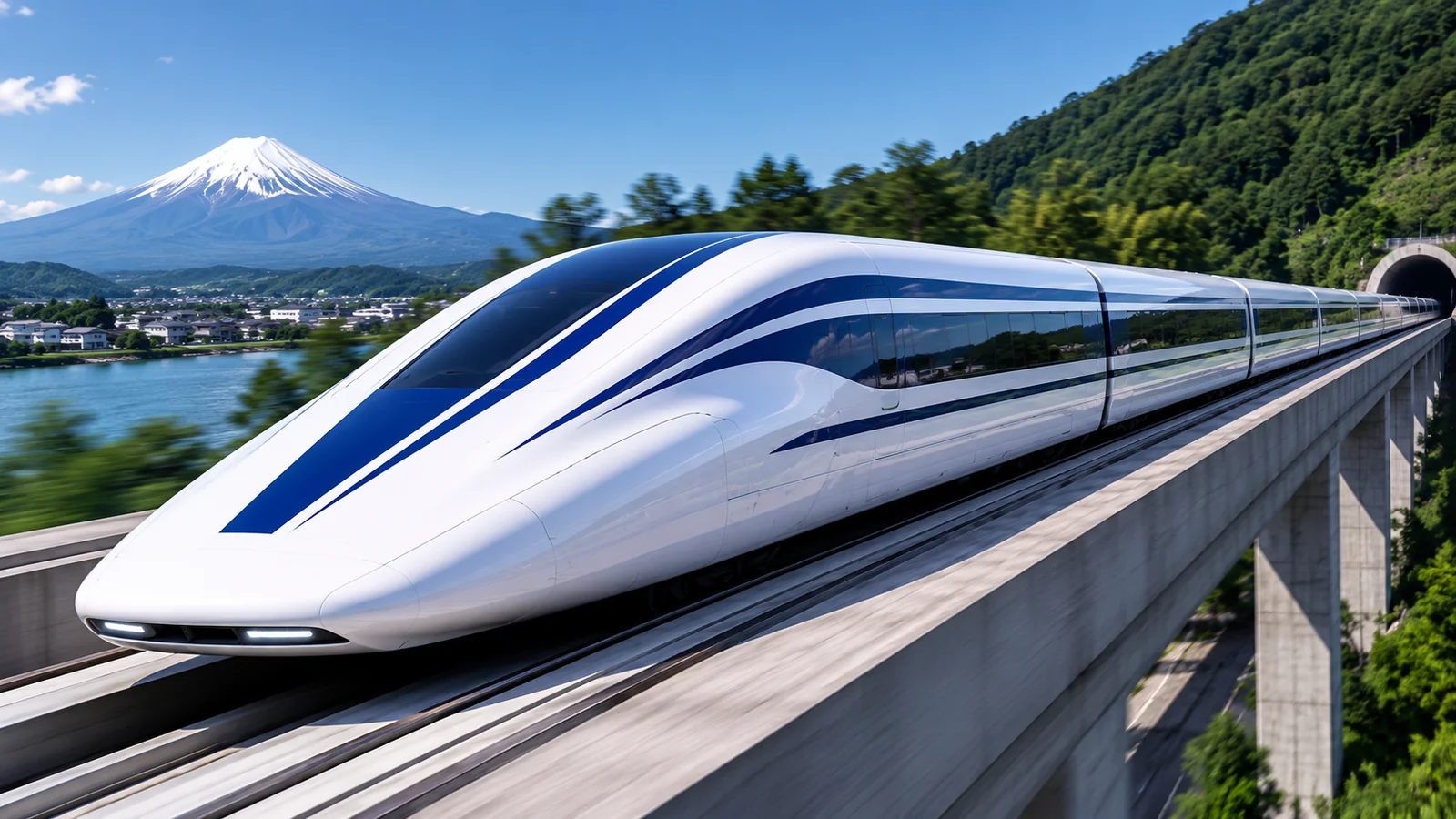
The Japanese government has officially approved the continuation of the Linear Chuo Shinkansen high-speed maglev railway project, which involves the construction of a tunnel beneath the Southern Alps. This was reported by Zamin.uz.
According to international media reports, the project operator, JR Central, has successfully completed the required environmental assessments after years of study. The decision clears the main obstacle to building the world’s fastest magnetically levitated trains, which operate without physical contact with the rails.
The project had been stalled due to regional concerns in Shizuoka Prefecture. Local authorities had expressed worries that tunneling beneath the mountainous area near the Oi River could affect groundwater levels and harm the environment.
As a result, the initially planned launch date of 2027 was postponed indefinitely. Now, the company has committed to strengthening environmental protection measures and implementing strict monitoring of water resources.
The new technology is based on magnetic levitation, allowing the train to float several centimeters above the tracks using a special magnetic field. By eliminating friction entirely, this enables speeds of up to 500 kilometers per hour.
For comparison, current high-speed trains take about 30 minutes to travel between Tokyo and Nagoya. The new maglev will reduce this time to just 40 minutes.
Upon completion of the second phase, the line will be extended to Osaka. As a result, travel time between Tokyo and Osaka will be cut from the current two hours to just one hour.
This will not only improve convenience for passengers but also integrate the country’s major economic centers into a single high-speed transport network.
Experts estimate that construction in complex terrain could take at least ten years.
If the process proceeds without unexpected delays, the world’s first intercity maglev line could begin operations in 2037. The total project cost is estimated at approximately 68 billion dollars.
The launch of the new route will also reduce congestion on conventional railways. Freed-up capacity will be redirected toward enhancing regional competition and improving freight logistics.
Although Japan is considered a global leader in this field, China is also testing its own high-speed projects. However, Japan’s initiative is expected to become the largest operational system designed for long-distance intercity travel.
This technology could serve as a model for other countries, including Uzbekistan, which is modernizing its transport infrastructure. While our country currently operates the Afrosiyob high-speed trains, Japan’s experience demonstrates a fundamentally new stage in rail transport evolution.