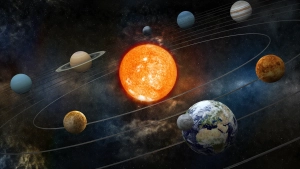



The Earth's population has significantly exceeded the planet's capacities

Recent scientific research indicates that the Earth's population has significantly exceeded our planet's natural capacities. This was reported by Zamin.uz.
Concerning data on this matter were detailed in a study published in the scientific journal Environmental Research Letters. During this analysis, scientists relied on an important concept called carrying capacity.
Using this method, they calculated how many people can comfortably live on the planet without harming nature. According to experts, to maintain the stability of Earth's resources, the optimal figure should be approximately two and a half billion people.
However, it is a fact that today the world population has exceeded eight billion. Researchers emphasize that the excessive use of fossil fuels caused such sharp growth in the population.
While this process served to improve human living standards on one hand, on the other, it led to the ruthless consumption of natural resources. As a result, society pursued short-term economic gain at the expense of long-term ecological stability.
Dependence on hydrocarbons is further complicating environmental problems. This situation is also having a negative impact on global climate change.
According to scientists' forecasts, the population will continue to grow in the coming decades. It is estimated that by the second half of the twenty-first century, the world population could reach eleven or twelve billion people.
Such demographic changes make issues of global resources, environmental protection, and sustainable development more urgent than ever. Humanity will need to find new ways of living in harmony with nature and fundamentally rethink its consumption culture in the future.