



First ever Greenland shark found in Irish waters
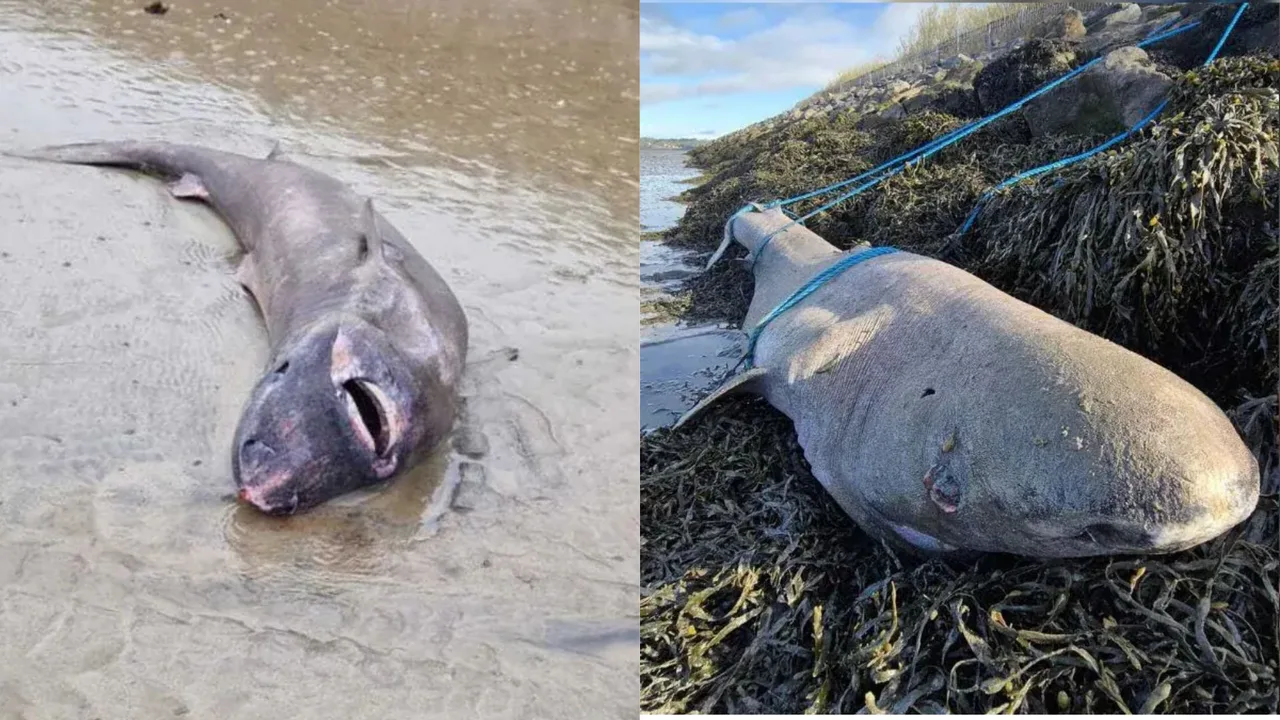
Local residents walking along the Irish coast witnessed an unexpected and astonishing event, according to Zamin.uz.
Among the debris washed ashore from the sea, the body of one of the longest-living vertebrates on Earth—a ancient Greenland shark—was discovered. According to experts, this massive marine predator can live up to five hundred years, and its appearance in Irish waters is being recorded for the first time in the country’s history.
As reported, Hammad Chaudri and James Winters were strolling along the Finnisklin coast in Sligo when they encountered the unusually large marine creature. Initially, witnesses thought it was an ordinary shark, but upon noticing its distinctive features, they suspected something unusual and reported it to the relevant authorities.
After examination, specialists confirmed that the carcass belonged to a rare Greenland shark. They described the incident as scientifically significant and extremely rare.
Later, the shark’s body was transported to the Natural History Museum for further in-depth analysis. Based on preliminary findings, experts estimate the shark lived for approximately one and a half centuries.
By analyzing its body structure and developed characteristics, scientists believe the animal had nearly reached adulthood before being washed ashore. Although this age is considered relatively young for the species—since Greenland sharks are known to live for several centuries—it remains a remarkable find.
According to scientific data, this species is considered one of the longest-living vertebrates in the world, with specimens documented to have lived over five hundred years.
The Greenland shark is one of the largest predators on Earth, capable of reaching lengths exceeding six meters—comparable to the size of a large truck.
Although the discovery of such a creature in shallow waters is unusual, experts emphasize that this finding could provide valuable new insights into the mysterious deep-sea ecosystem. Greenland sharks typically inhabit the extremely deep and icy waters of the Arctic and North Atlantic Oceans.
As a result, studying them in their natural habitat is extremely challenging. This species is distinguished by its powerful body and small eyes.
They feed on various fish and even marine mammals. It is important to note that Greenland sharks pose no threat to humans, as they live in cold, deep water layers that people do not typically enter.
Furthermore, experts warn that the meat of this shark, in its raw state, can be toxic. Only meat prepared through special processing and stored for a long time may be safe for consumption.
Currently, scientists continue to study this rare discovery.