




One person died after a Tesla car drove into a cafe in California
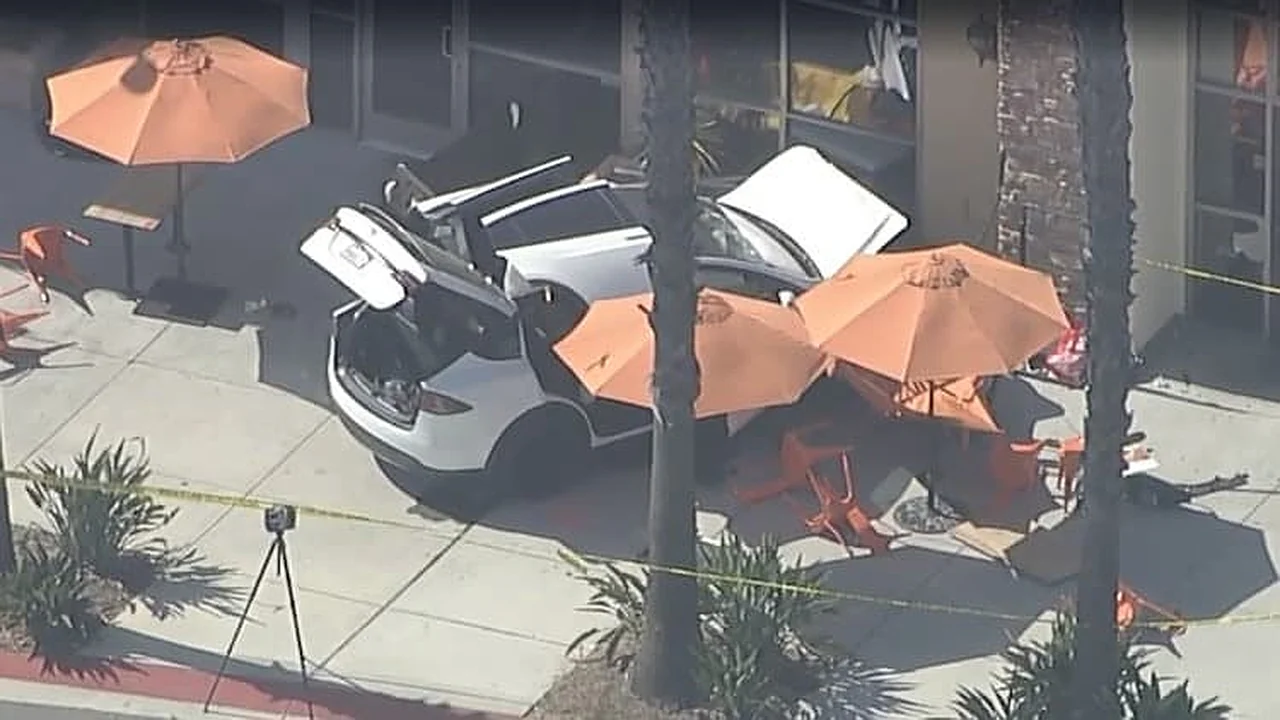
A traffic accident involving a Tesla electric vehicle occurred in California, USA, as reported by Zamin.uz.
The car crashed into an open terrace café at a shopping center, resulting in one person dying on the spot and several others sustaining injuries of varying severity. The incident has once again raised public concern about the safety systems of modern electric vehicles and driver responsibility.
The accident took place in the parking lot of a shopping complex in Simi Valley. According to police reports, a 64-year-old woman was driving the Tesla northbound when she attempted to turn right onto an eastbound exit.
However, during the maneuver, the driver lost control of the vehicle, which veered off the road, struck a pedestrian sidewalk, and collided with the outdoor area of a restaurant. As a result of the impact, one woman inside the café died at the scene.
The driver of the vehicle was hospitalized with minor injuries. It was reported that there were four underage passengers in the car, one of whom was taken to the hospital for medical treatment.
Additionally, at least five other people inside the café sustained injuries of varying degrees. Local law enforcement authorities are currently investigating the causes of the accident.
Preliminary assessments suggest that speed limits may have been exceeded in the parking area. Police officials are analyzing the vehicle’s technical condition and the driver’s actions, but the exact cause of the loss of control has not yet been officially confirmed.
The main question of interest to experts is whether Tesla’s Autopilot or other driver-assistance systems were active at the time of the collision. While these systems are designed to assist the vehicle position, manufacturers always emphasize the driver supervision.
In recent months, the role of driver-assistance systems in accidents in the US and other countries involving Tesla vehicles has frequently focused on the role of these assistance systems. However, at this time, there is no conclusive evidence of malfunction in the intelligent systems in this specific case.
Given the growing popularity of electric vehicles in the Uzbek market as well, such incidents demand that drivers exercise greater caution when operating high-tech vehicles. Although the Autopilot function is available, entrusting full control to the machine in urban conditions or crowded pedestrian areas can lead to very dangerous outcomes.
As the investigation concludes, it is expected to determine whether the primary cause of the accident was human error or technical failure.
