


Georgian Scientists Update Polymer Design with the Help of Artificial Intelligence
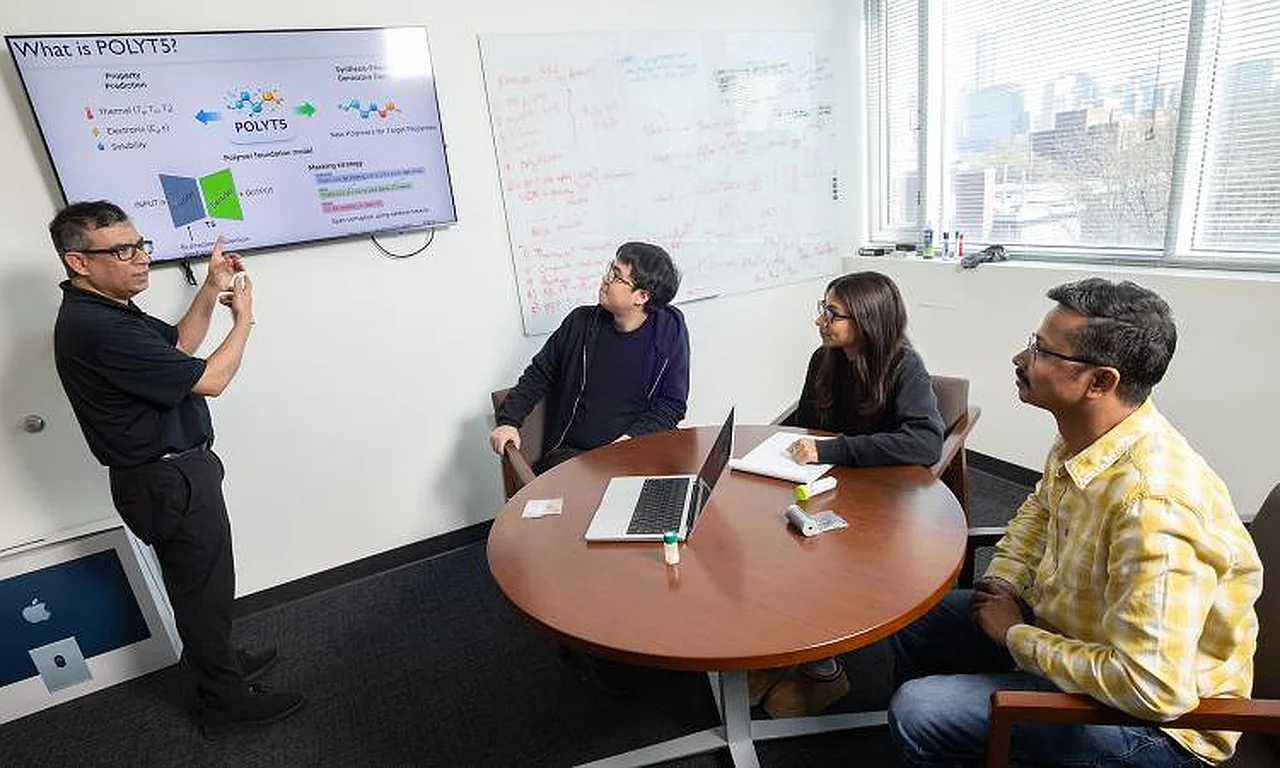
Scientists at the Georgia Institute of Technology have achieved a new and significant breakthrough in using artificial intelligence to create polymer designs. This was reported by Zamin.uz.
The advanced software system they developed successfully passed laboratory tests and proved its practical effectiveness. This new tool allows users to input the desired properties of the material.
The system then proposes chemical structures that fully meet these requirements. The project was led by Rampy Ramprasad, a leading expert in the field of materials science, and the results were published in the international journal npj Artificial Intelligence.
The new software, named POLYT5, was created to deeply understand the unique laws and logical structure of chemistry. This process is compared to how natural language models learn to construct sentences.
According to the scientists, this approach reduces the error of artificial intelligence suggesting chemically impossible or incorrect formulas for compounds. The research team emphasized that previous AI methods often proposed polymer variants that were theoretically correct but could not be synthesized in laboratory conditions.
The new model was trained on thousands of real polymers and hundreds of millions of hypothetical candidates. Special attention was given to structures that are realistic and feasible from a manufacturing process perspective.
At the same time, an auxiliary model called polyBART was also created within this work. To test the new methodology, the scientists tasked the AI with designing dielectric materials used in electric vehicles and defibrillators.
Subsequently, the researchers actually synthesized the material proposed by the AI in the laboratory and confirmed its properties. This result was a clear proof that AI-generated designs can work fully not only on computers but also in the physical world.
This discovery will significantly accelerate the process of creating new materials in the future.