Ampera showcased a core reactor module for the Sunway AI core
The rapid development of artificial intelligence technologies is leading to a sharp increase in the demand for electricity worldwide. This was reported by Zamin.uz.
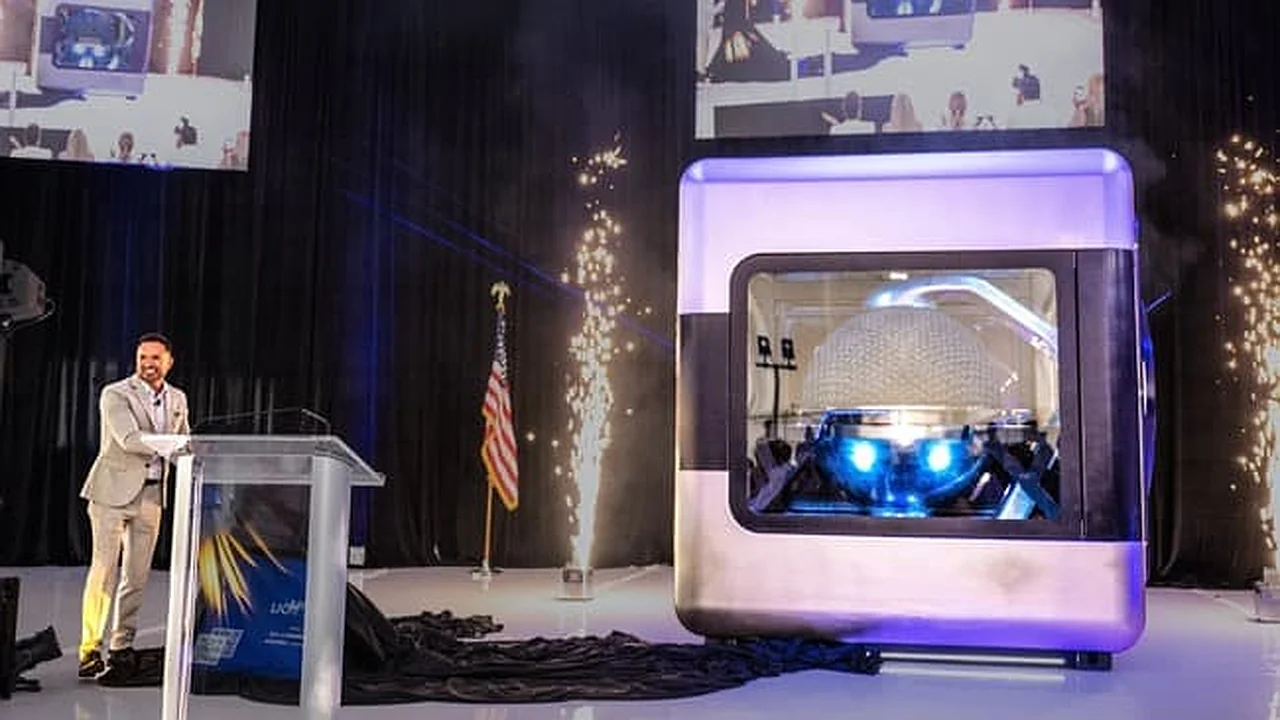
In order to effectively solve this global problem, the startup Ampera has presented its revolutionary development to the public. The company demonstrated the first full-scale nuclear reactor module in the form of a special container, created using three-dimensional printing technology.
This device is expected to provide AI data centers with continuous and environmentally friendly clean energy in the future. This reactor developed by Ampera is based on a subcritical and solid-state structure.
The unique feature of the project is that it uses thorium fuel instead of traditional uranium. Unlike uranium, thorium does not have the property of spontaneous fission and requires an external neutron source to start a chain reaction.
This takes nuclear safety to an entirely new level, virtually eliminating the risk of uncontrollable explosions or catastrophic reactions. The reactor's subcritical operating mode means that the system cannot continue its operation without an external trigger.
That is, if an emergency occurs and the external power is cut off, the nuclear reaction stops automatically. Furthermore, the absence of moving parts in the active part of the device significantly increases its reliability.
This greatly simplifies maintenance processes during long-term autonomous use. Ampera engineers emphasize that the reactor modules are intended for mass production in factory conditions.
They can be easily transported to any point in the world in standard cargo containers. Such an approach ensures a high level of convenience in designing energy systems.
If necessary, several modules can be combined to increase the total capacity or integrated into hybrid energy complexes. According to the company's calculations, a single device operating at full capacity is capable of producing approximately thirty megawatts of electricity.
This utilizes a closed-cycle system based on supercritical carbon dioxide gas. Such high capacity can power not only large server centers, but also defense facilities, industrial enterprises, maritime transport, and settlements in remote areas.
So far, the Ampera company has only demonstrated the engineering module. There is no official information yet regarding the actual full launch of the reactor or whether it has begun producing electricity.
Additionally, the deadlines for the project's commissioning for commercial purposes have not yet been disclosed. Nevertheless, the combination of modern printing methods and modular nuclear technologies is expected to start a new era in the energy sector, especially for high-tech infrastructures.
For countries like Uzbekistan, which are rapidly industrializing and transitioning to a digital economy, such compact energy sources could be of great importance in the future.