


Chinese scientists have created a nuclear battery that will last for a thousand years
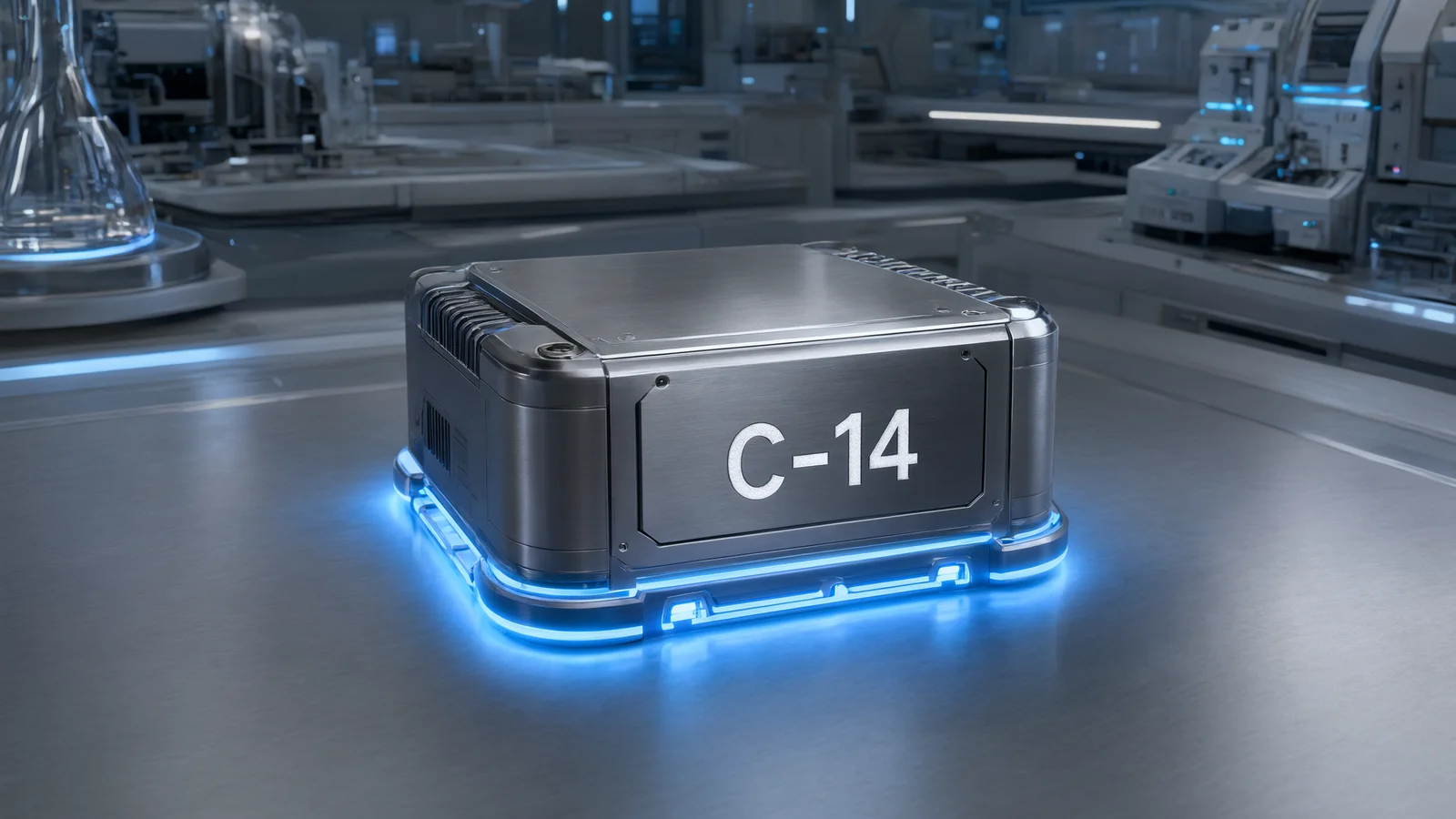
Chinese scientists have unveiled a new generation of nuclear battery based on the carbon-14 isotope, which is expected to bring a major breakthrough in the energy sector. This was reported by Zamin.uz.
The device, designed to operate for several thousand years without maintenance, could revolutionize fields where technical servicing is impossible. Developed by researchers from the Northwest Pedagogical University in collaboration with Gansu Zhulong Technology, the system is named Qianjiyuan Tianshu.
Unlike previous projects, this new development is significantly more powerful, compact, and entirely based on China’s own technological foundation. The battery operates using the radioactive carbon-14 isotope and a silicon carbide semiconductor.
Unlike traditional radioisotope generators, this technology does not convert heat into electricity. Instead, the energy from beta radiation is directly transformed into electric current.
The developers compare the process to solar panels, except that instead of light photons, electrons produced by the decay of carbon-14 generate a steady current in the semiconductor layer. Technical specifications confirm the uniqueness of the device.
The battery has a volume of sixteen and eight-tenths cubic centimeters. It provides two hundred and six volts of voltage and corresponding current, delivering a maximum power of one hundred and twenty-three microwatts.
Although this is insufficient to power smartphones, it is ideal for specialized sensors that must operate continuously for decades. The half-life of carbon-14 is approximately five thousand seven hundred and thirty years.
This means such energy sources can remain stable for several centuries. Scientists plan to apply this technology in spacecraft, artificial satellites, autonomous sensors, and scientific research equipment.
It could also be useful for medical implants like pacemakers, industrial monitoring systems, and devices in remote areas where maintenance is not feasible.
The use of isotopic energy sources in research is not new. For example, NASA has used similar systems in its Voyager probes and the Curiosity rover on Mars. Likewise, China has employed nuclear batteries in its lunar missions.
However, the new project stands out due to its exceptional compactness and suitability for microelectronics, opening a new phase in the widespread adoption of this technology. Experts believe such batteries could become a primary power source for autonomous intelligent systems and long-term scientific missions operating without human intervention.
This represents an important step toward ensuring energy independence.