



The summit of Everest was once the floor of an ancient sea
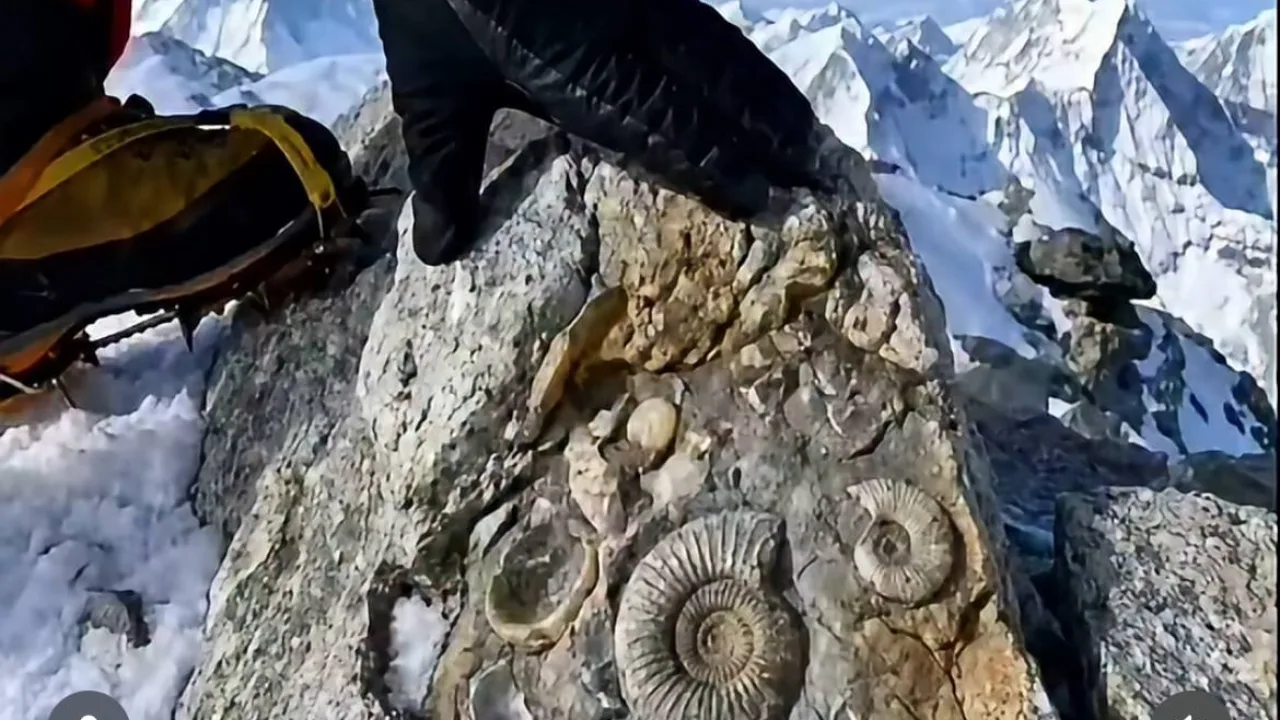
Today, Everest is known to everyone as the highest point on our planet, as reported by Zamin.uz.
However, the limestone and fossilized remains of ancient marine organisms found in its upper layers reveal astonishing information about the region’s past. These discoveries clearly indicate that this massive mountain range was once located on the ocean floor.
Scientists explain this phenomenon through the geological history of the Himalayas’ formation. Approximately fifty million years ago, the Indian tectonic plate began moving northward and collided with the Eurasian plate.
As a result of this colossal collision, immense pressure caused the deformation of the Earth’s crust. During this time, limestone and other sediments that had accumulated over millions of years on the floor of the ancient Tethys Ocean were gradually pushed upward.
It was precisely this process that transformed the ocean floor layers into the structural foundation of the Himalayan mountain system. The fossilized remains of marine creatures were also preserved within these rocks.
For this reason, traces of marine life found on Everest are considered one of the most important proofs that the mountain was once lifted from the ancient seabed. Notably, this geological process is still ongoing.
Due to continued tectonic movements beneath the Earth’s surface, the Himalayas continue to rise—although at an extremely slow pace—gaining a few millimeters in height each year. This demonstrates the incredible power of nature and confirms that the shaping of the Earth’s surface is a complex process that has been unfolding for millions of years.
Everest is not merely a symbol of height; it is a living museum that tells the story of our planet’s distant past.