


Scientists have uncovered the secret of the Blood Falls in Antarctica through research
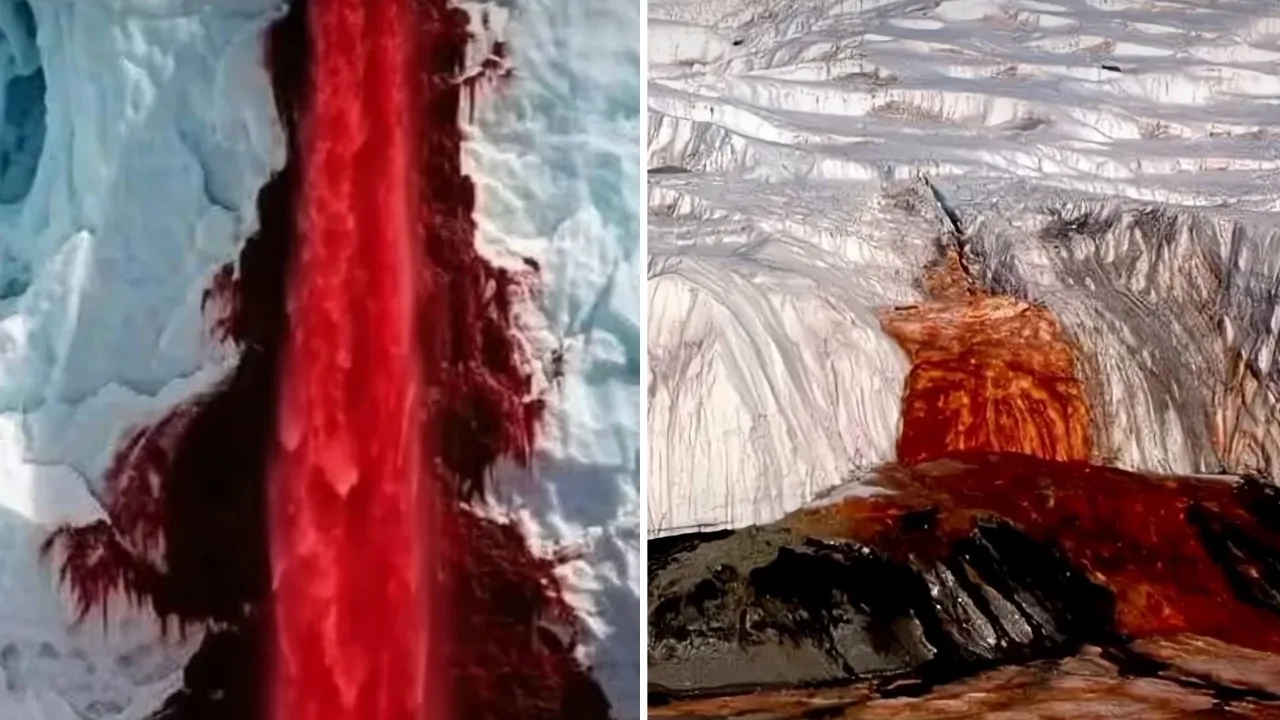
Located in one of the most remote valleys of Antarctica, a natural phenomenon known as Blood Falls has long captured the attention of the world. This was reported by Zamin.uz.
Although this waterfall earned its terrifying name due to its bright red color, in reality, its hue has nothing to do with blood. The cause lies in unique natural-chemical processes occurring beneath the ice.
This unusual sight was first discovered and documented in 1911 by Australian geologist Thomas Griffith Taylor. The red-colored water flows out from beneath the Taylor Glacier.
For many years, the origin of this mysterious color sparked various theories among scientists. Research has shown that the water in the falls contains an exceptionally high concentration of iron, which is unusually saline.
This water has been trapped beneath the ice for nearly two million years, originating from an ancient lake isolated from the outside world. As it reaches the surface, the iron in the water reacts with oxygen in the air.
As a result, the iron oxidizes and forms a substance similar to rust, which is familiar to us. It is precisely this chemical reaction that dyes the water a deep blood-red.
Due to the extremely high salt content in the water, it remains liquid even in the harshest Antarctic cold, refusing to freeze. Even more astonishingly, in these extreme conditions—complete darkness and oxygen scarcity—unique microorganisms have been found that have adapted to survive.
These organisms obtain the energy necessary for life not from sunlight, but from chemical reactions involving iron and sulfur. Today, Blood Falls serves as an important source not only for geologists but also for specialists involved in space research.
By studying this environment, scientists hope to answer the question of whether life could exist in icy, extremely cold habitats such as Mars or Europa, Jupiter’s moon. This place offers a rare opportunity to study some of the most resilient and unusual forms of life on Earth.