


In driverless taxis, passengers regularly violate etiquette rules
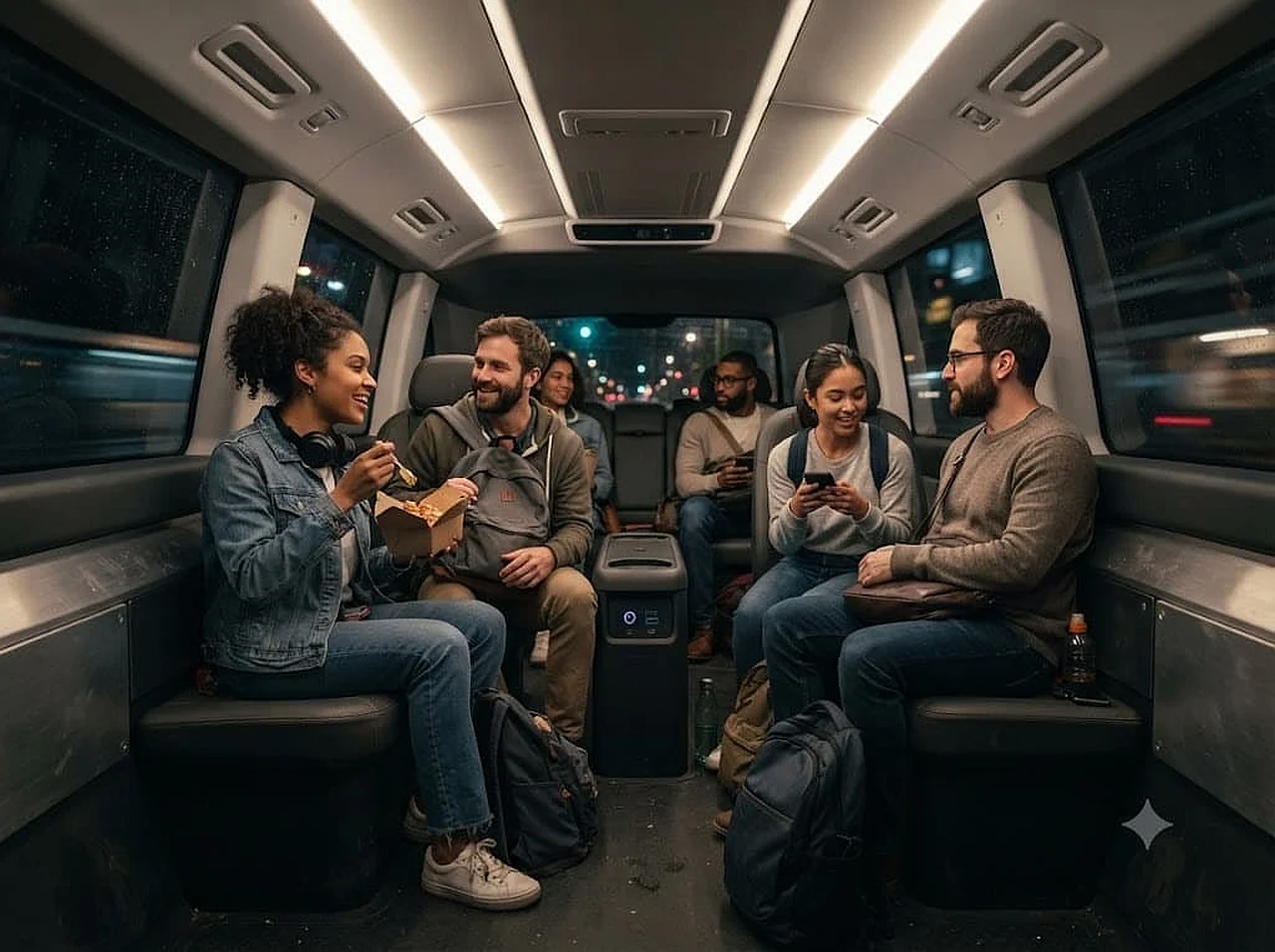
Zoox, a company developing autonomous vehicles based on artificial intelligence, encountered an unexpected social issue after conducting extensive trials in Las Vegas and San Francisco, Zamin.uz reported.
The absence of a driver has led to a complete loss of order in the cabin and frequent violations of etiquette by passengers, according to industry publications.
According to data, since September last year, Zoox’s service has transported over 500,000 passengers to their destinations. However, behind these successful figures lie serious organizational challenges.
As stated by Kris Stoffel, director of the company’s design studio, despite the ban on smoking in driverless cabins, passengers regularly smoke tobacco and electronic cigarettes. Zoox vehicles stand out due to their unique design.
They have neither a steering wheel nor a driver’s seat. Passengers sit face-to-face in a cabin resembling a tram wagon and move together.
It is precisely this unrestricted freedom that has led to irresponsible behavior among many users. One of the biggest challenges engineers face is cabin pollution.
During practical use, passengers’ health deteriorates, and pollution quickly spreads to hard-to-reach corners of the cabin, requiring extensive cleaning after each trip.
As a result, the vehicle’s service direction has shifted, causing significant damage to the company’s revenue. Drawing from this negative experience, Zoox engineers are implementing a series of changes for the upcoming generation of robotaxis planned for launch in Austin and Miami.
In total, moisture-resistant and odor-absorbing special coatings are now being used. To speed up cleaning, easily washable interior materials have been selected, and germicidal traps are applied to prevent liquids from seeping in.
Additionally, an upgraded ventilation system is being installed to improve air circulation and quickly eliminate unpleasant odors. Not only Zoox, but also Waymo, another major player in the industry, has reported facing similar issues.
Waymo vehicles have also recorded instances of passenger vandalism and disorderly conduct. This indicates that the autonomous transport sector must prepare not only technologically, but also socially.
In summary, as the era of driverless vehicles approaches, manufacturers are being forced to reconsider their strategies, taking human behavior into account. Today, the main focus is not only on safe movement, but also on creating automated mechanisms to maintain order in the cabin.