


The first dinosaur fossil found in Antarctica was identified nearly forty years after it was discovered
An important discovery related to the history of Antarctica has attracted the attention of scientists worldwide. This was reported by Zamin.uz.
For nearly forty years, a piece of bone stored as a simple exhibit in a museum turned out to be the first dinosaur remains found on the icy continent. This unique find had long awaited recognition of its true value.
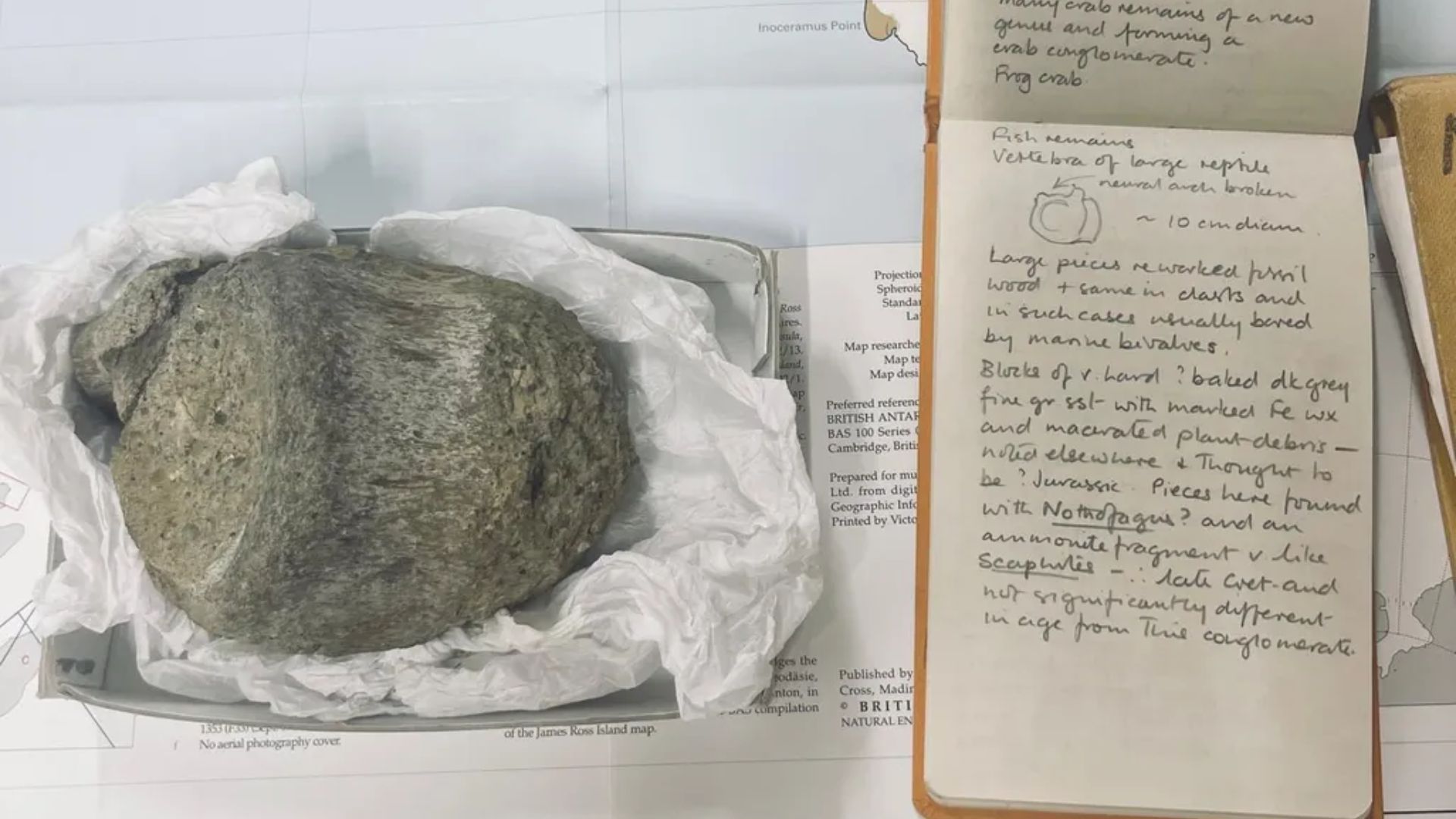
The fossil was discovered in 1985 during a scientific expedition to James Ross Island in Antarctica. At the time, specialists were unable to classify it precisely, so the bone was handed over to the geological collection of the British Antarctic Survey in Cambridge.
Among thousands of other specimens, this bone remained overlooked by researchers for many years. Thirty-eight years later, the collection’s curator, Dr. Mark Evans, paid special attention to its structure while re-examining the samples.
Initially thought to belong to a marine reptile, Evans noticed features characteristic of dinosaur bones. The specimen was then sent to Professor Paul Barrett, a paleontologist at the Natural History Museum, for in-depth analysis.
As a result of detailed study, it was confirmed that the bone belonged to the tail of a titanosaur—a massive herbivorous dinosaur. According to the expert, the unique structure of the bone’s two sides is typical of this group and does not occur in other dinosaurs.
Titanosaurs were among the largest creatures to ever walk the Earth. Some species reached lengths of up to 35 meters and weighed as much as 60 tons.
The owner of this Antarctic specimen was likely a young dinosaur about 7 meters long, or a smaller representative of this group. According to scientists, this dinosaur lived approximately 82 million years ago, during the Late Cretaceous period.
At that time, Antarctica was not the frozen wasteland it is today, but rather covered in lush forests and enjoyed a mild climate suitable for large animals. This discovery fundamentally changes our understanding of the ancient nature and ecosystem of Antarctica.
After lying unnoticed for forty years, this small piece of bone has become one of the most important pieces of evidence in the history of Antarctic paleontology. The findings were announced in influential scientific journals and highly regarded by experts.