The impact of dehydration on the human body and brain
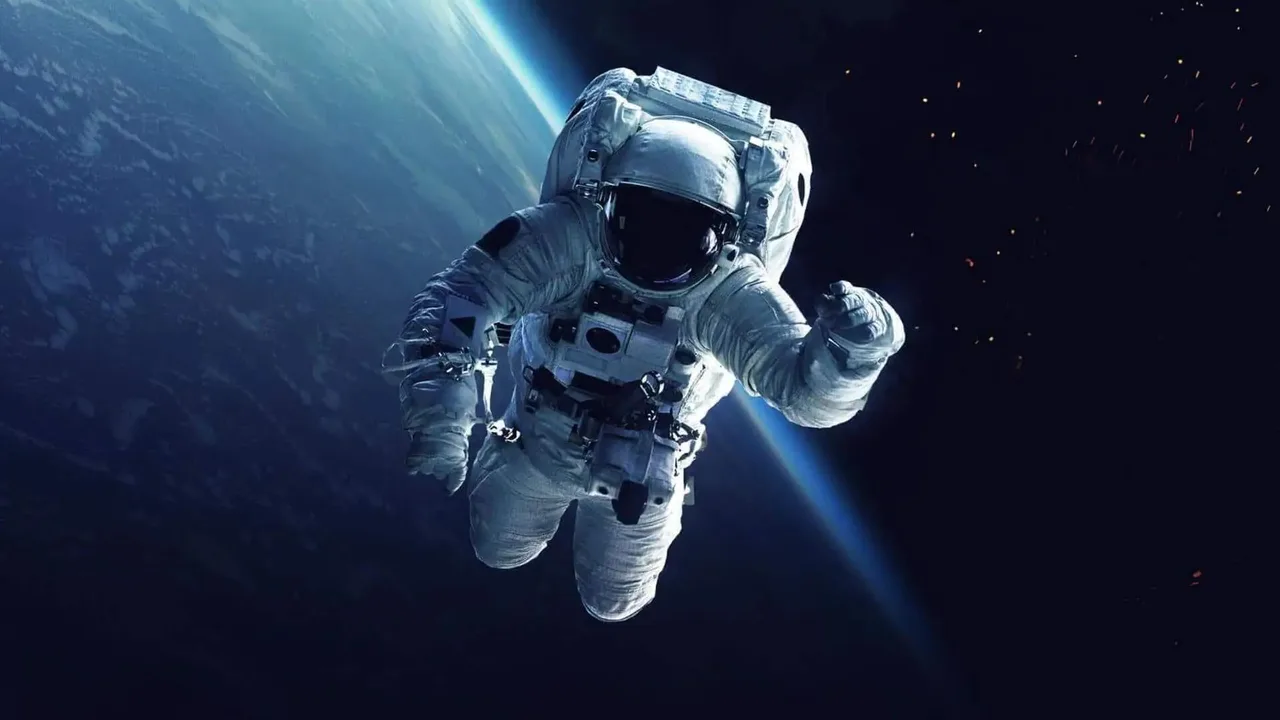
The human body has adapted over billions of years of evolution to Earth's usual gravitational force. This was reported by Zamin.uz.
Thus, when space flights first began, scientists were confronted with a pressing question: what happens to the human body, and, in a 0g environment?
Doubts existed as to whether blood circulation would be disrupted, muscles would atrophy, or serious damage would occur to brain activity. Experiments conducted in the late 1950s with various organisms showed that living beings can survive in space.
Later, human spaceflights demonstrated that people not only survive but can also adapt to the new environment. European Space Agency astronaut Luca Parmitano emphasizes that in space, the human body undergoes noticeable changes within just a few weeks.
According to him, the face swells, the legs thin out, and a person begins to feel their body in a completely different way. Specialists regard this as the body's natural adaptation to weightlessness.
However, space affects not only muscles and bones but also the brain. On Earth, every movement involves overcoming gravity, but in space, this need disappears.
As a result, bones begin to lose calcium, muscles weaken, and certain changes in heart function are observed. Moreover, due to the shifting of bodily fluids toward the upper part of the body, astronauts' faces appear puffy.
For this reason, specialists working on the International Space Station are required to engage in physical exercise for at least two hours every day. Despite this, astronauts returning after six-month missions often cannot exit the capsule independently and are carried out on special equipment.
It may take up to four years for their bones to fully recover. Specialists believe that the most important organ in the human body is the brain.
If a person goes to space without a healthy and fully functional brain, all other preparations lose their meaning. So far, research on the effects of space on the brain has been limited to a small number of astronauts.
For example, American astronaut Scott Kelly spent a year aboard the space station, while his identical twin brother Mark Kelly remained on Earth. According to the study results, Scott showed no significant changes in cognitive abilities during the flight, but after returning to Earth, these abilities reportedly declined somewhat for about six months.
Recently, a new study published in influential scientific journals analyzed data from fifteen brain imaging studies involving a total of 377 participants. Among them were astronauts as well as volunteers who took part in experiments simulating space conditions on Earth.
According to the scientists' conclusions, in weightlessness, the human brain adapts both physically and functionally. In particular, significant changes were observed in the areas responsible for movement and balance.