



Russia is building a special test track for high-speed trains
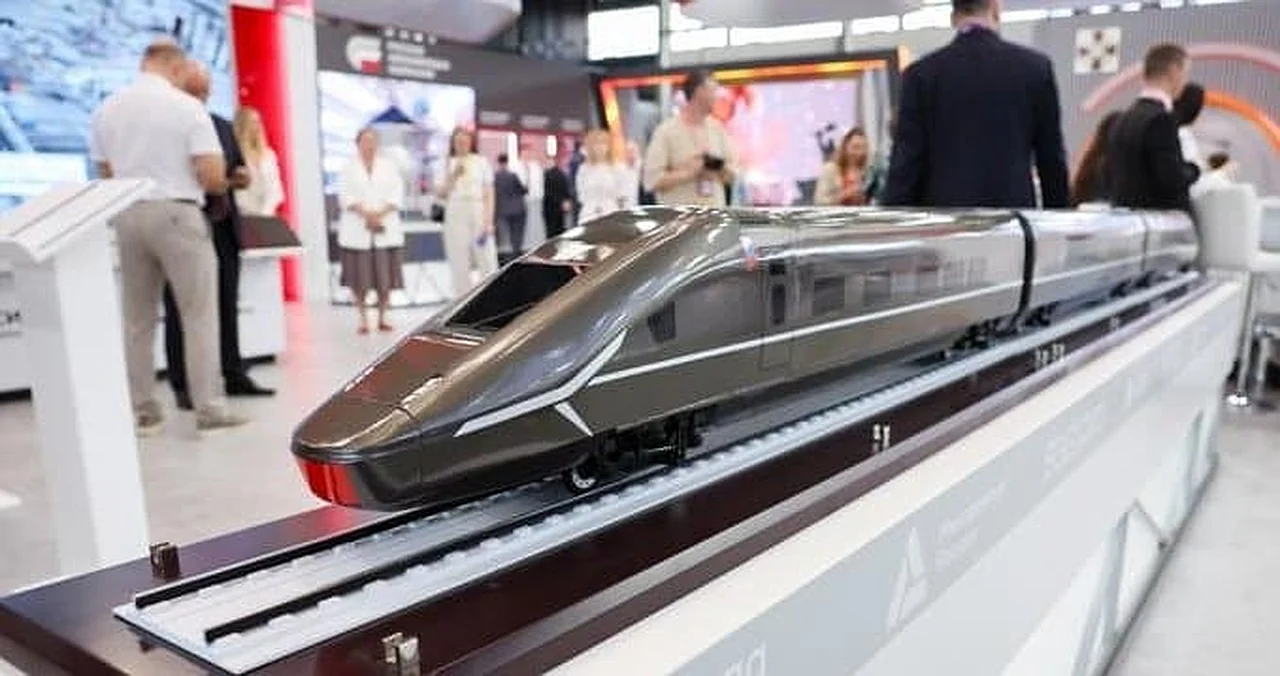
Russia's railway company has begun constructing a special test track as part of a new high-speed mainline project connecting Moscow and St. Petersburg. This was reported by Zamin.uz.
This major project is expected to radically transform the regional transport logistics and serves to test the safety and durability of high-tech trains. The experimental section being built between the Sablino and Tosno directions in Leningrad Oblast spans approximately half a kilometer.
At this facility, the impact on infrastructure elements during train movement at speeds exceeding 200 km/h is thoroughly studied. Specialists analyze not only the effect on rails but also the pressure exerted on the ground layer.
One of the main directions of the tests is to test seamless high-structure designs. Instead of traditional rail joints used in conventional railways, seamless monolithic slabs or special engineering systems are applied here.
This method plays a crucial role in ensuring the strength and flatness of the track for high-speed trains. Additionally, innovative rail fasteners and unique track switches are also tested in the polygon area.
The new type of track switch, 118 meters long, is controlled through eight electric actuators. This technology allows trains to move at speeds of up to 400 km/h in the main direction and 120 km/h in the lateral direction.
More than half a thousand monitoring sensors are installed along the polygon to observe the condition of the infrastructure in real-time. These devices are placed both underground and on the upper parts of the structure, recording any vibrations and changes.
A special software suite, unmatched in Russian railways, has been developed to manage the system. Until the new high-speed trains are fully ready, all test processes will be carried out using existing Sapsan trains.
The trains themselves are also equipped with special sensors to study their dynamics. For information, Russia's first high-speed train is designed to reach speeds of up to 400 km/h, and currently, its body components are being assembled.
Given that high-speed railways, particularly Afrosiyob trains, are also active in Uzbekistan, such technological updates in neighboring regions are of great interest for regional engineering experience. If this project in Russia is successfully completed, it is expected that passenger travel time will be significantly reduced in the future and rail transport attractiveness will increase.
Such technical solutions not only increase speed but also serve to elevate passenger safety to a new level.