



Australian scientists found unique traces of giant squids from the ocean floor
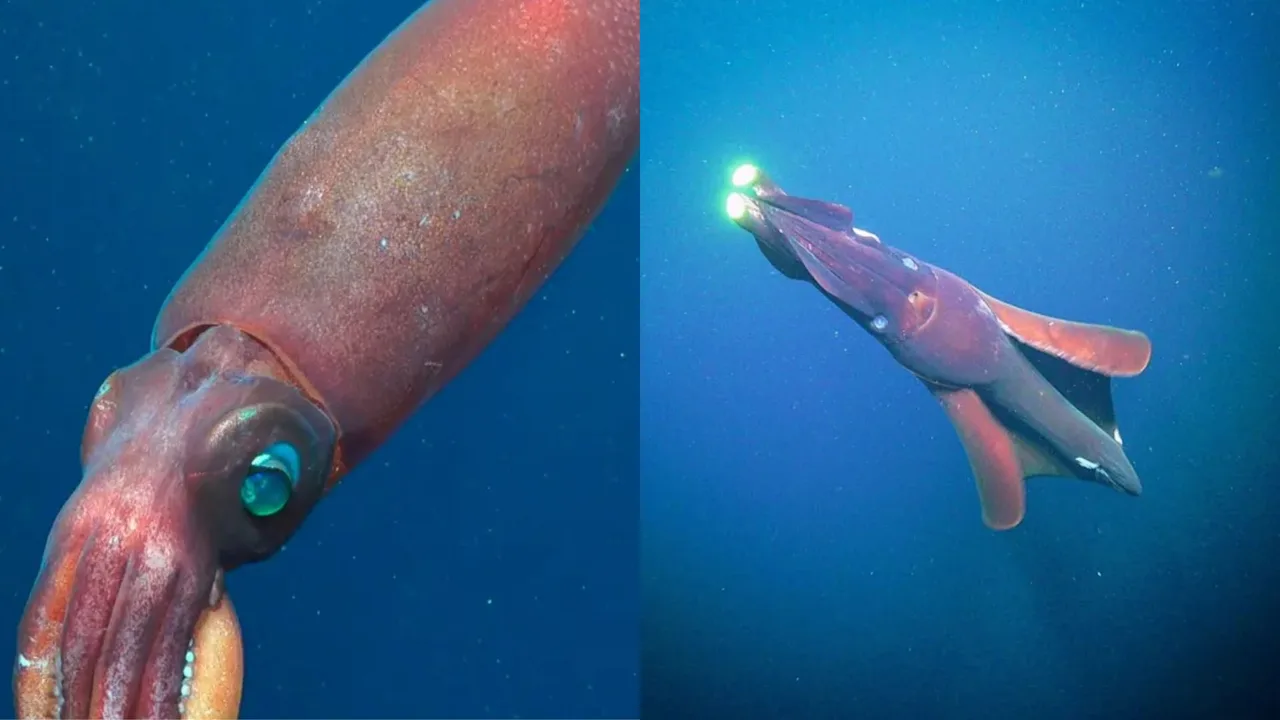
Australian scientists have discovered important traces of one of the most mysterious creatures living in the depths of the world’s oceans – the giant squid. This was reported by Zamin.uz.
The discovery is considered significant as it marks the first recorded sighting of the species in Western Australia’s coastal waters in the last quarter of a century. The findings were published in an influential scientific journal dedicated to environmental genetics.
According to the study’s authors, finding traces of this unique organism is a major event in marine biology. Dr. Georgia Nester, a researcher at the Oceans Institute of the University of Western Australia, said that the discovery of evidence related to the giant squid has sparked great interest and astonishment in the scientific community.
As reported, the giant squid is one of the least studied marine animals on our planet. It can reach a length of up to thirteen meters, which is roughly the size of a school bus.
The creature’s eyes are the size of a large pizza, making them the largest in the animal kingdom. Despite its impressive size, encountering the giant squid in its natural habitat is extremely rare.
This is mainly because the animal lives in the so-called twilight zone of the ocean, at depths of up to six hundred meters. It is highly elusive and leads a secluded life, which is why it rarely appears in camera lenses.
In this expedition, scientists did not encounter the creature itself but instead collected environmental DNA traces left behind in seawater. This modern method allows researchers to detect animals based on biological material preserved in water.
Experts emphasize that this approach is becoming increasingly important for studying mysterious species inhabiting the ocean depths. Dr. Lisa Kirkendale, head of the marine vertebrates department at the Western Australian Museum, praised the findings highly.
According to her, this is the first time the giant squid has been detected in Western Australia’s coastal waters using specialized technology. Furthermore, the case has entered history as the northernmost recorded sighting of the species in the eastern part of the Indian Ocean.
The research was conducted aboard a specialized scientific vessel. During the expedition, scientists collected over a thousand water samples, which were then subjected to deep analysis.
As a result, biological traces belonging to more than two hundred different species were identified. Among them were rare whales and sperm whales, as well as several species that had never before had never been encountered in these waters.
Among these were strange organisms such as the sleeper shark and the jawless fish. Scientists even do not rule out the possibility that some of the samples may represent species entirely new to science.
Experts believe that humanity still knows very little about the biodiversity of the ocean floor and is only beginning to grasp its true scale. Interestingly, the giant squid was first filmed alive only twenty years ago.