


NVIDIA's most powerful graphics card has a flaw
Problems related to NVIDIA's most powerful graphics card, the GeForce RTX 5090, are being widely discussed in the tech world, Zamin.uz reported.
Subsequent details have emerged online regarding the incident involving the power connector of this device melting. This time, the situation is not just a technical malfunction, but specialists are drawing attention to the inefficiency of a specially designed safety system.
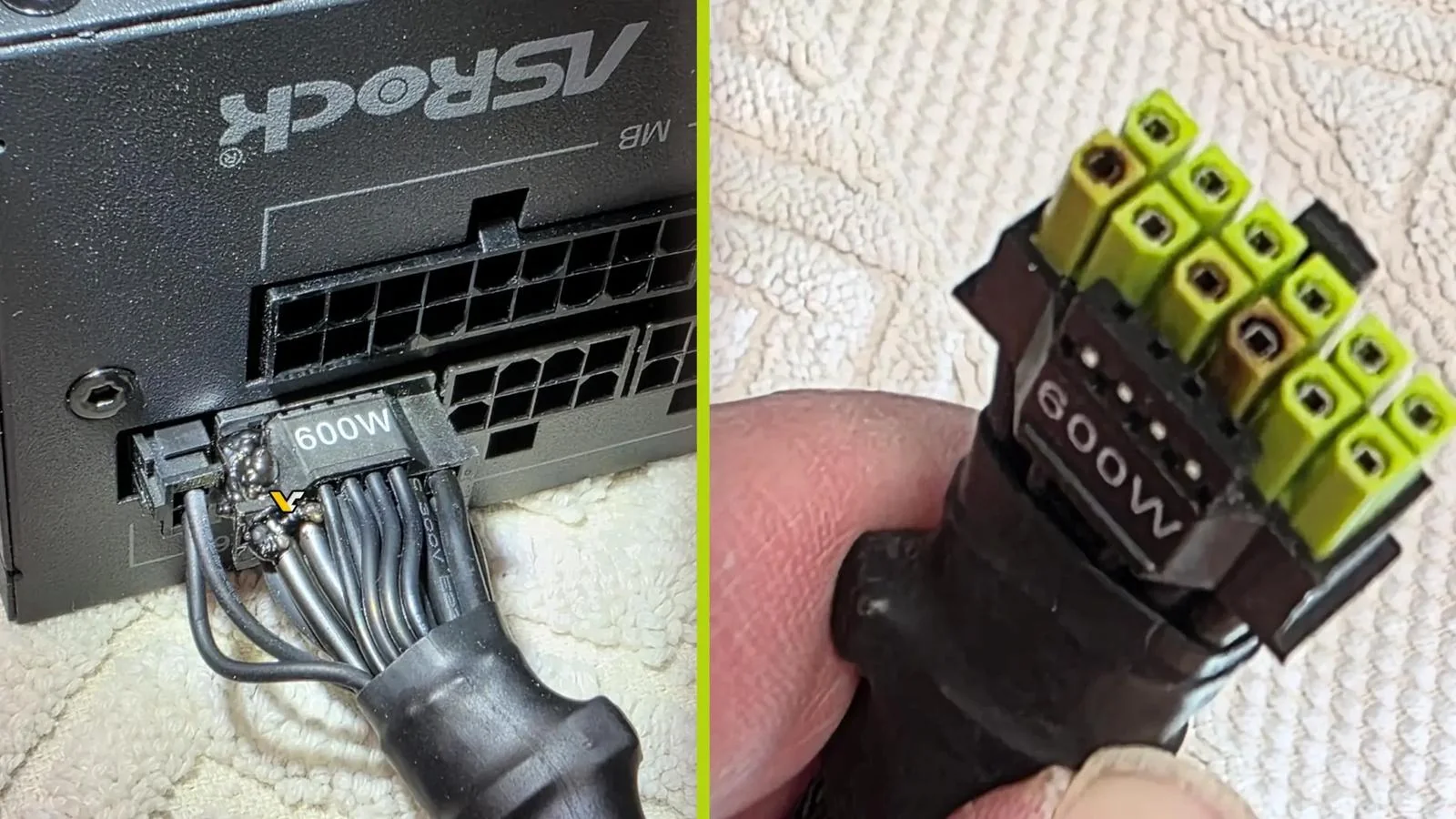
The incident has raised serious questions about how reliable the safety mechanisms of modern, high-power devices truly are. According to reports, the user connected the MSI GeForce RTX 5090 Gaming Trio OC graphics card directly to the ASRock PG1000-PSF power supply using a dedicated cable.
Although the system had operated without any issues and remained stable for several weeks, unexpected interruptions and malfunctions began to occur in the computer's performance. Upon inspection, the user discovered that the power connector and part of the cable had melted due to high temperatures.
The most surprising aspect of this situation is that the ASRock power supply was equipped with the manufacturer's proprietary TempGuard technology, designed to monitor temperature. The manufacturer emphasized that this system should continuously monitor the heat level of the connector and automatically reduce power if a hazardous condition arises.
However, in practice, this protective mechanism failed to work as intended. According to the device owner, the computer continued to operate even as the connectors began to melt.
Only after the user manually noticed physical damage and shut down the system did the shutdown occur. Subsequent checks revealed that not only the tip of the cable connected to the graphics card, but also the dedicated port on the power supply housing, had sustained serious damage.
Currently, the power supply manufacturer has retrieved the unit for in-depth laboratory analysis. The exact cause of the malfunction—whether it was due to a faulty cable or a software error in the protection system—remains unknown for now.
Notably, this is the second such unpleasant incident for this user. Previously, they experienced an identical melting issue with a different power supply combination.
In both cases, the primary damage affected not the graphics card itself, but the power supply and the power cable. This highlights the need to strengthen precautionary measures when using modern, high-power devices.
This serves as an important warning for technology enthusiasts and users in Uzbekistan. Even when installing high-power devices like the GeForce RTX 5090, one should not fully rely on even the most advanced protection systems.
Experts recommend ensuring that cables are securely fastened and regularly monitoring their temperature conditions. Above all, human oversight remains critically important in matters of technical safety.