



China successfully tested a rocket that is used many times
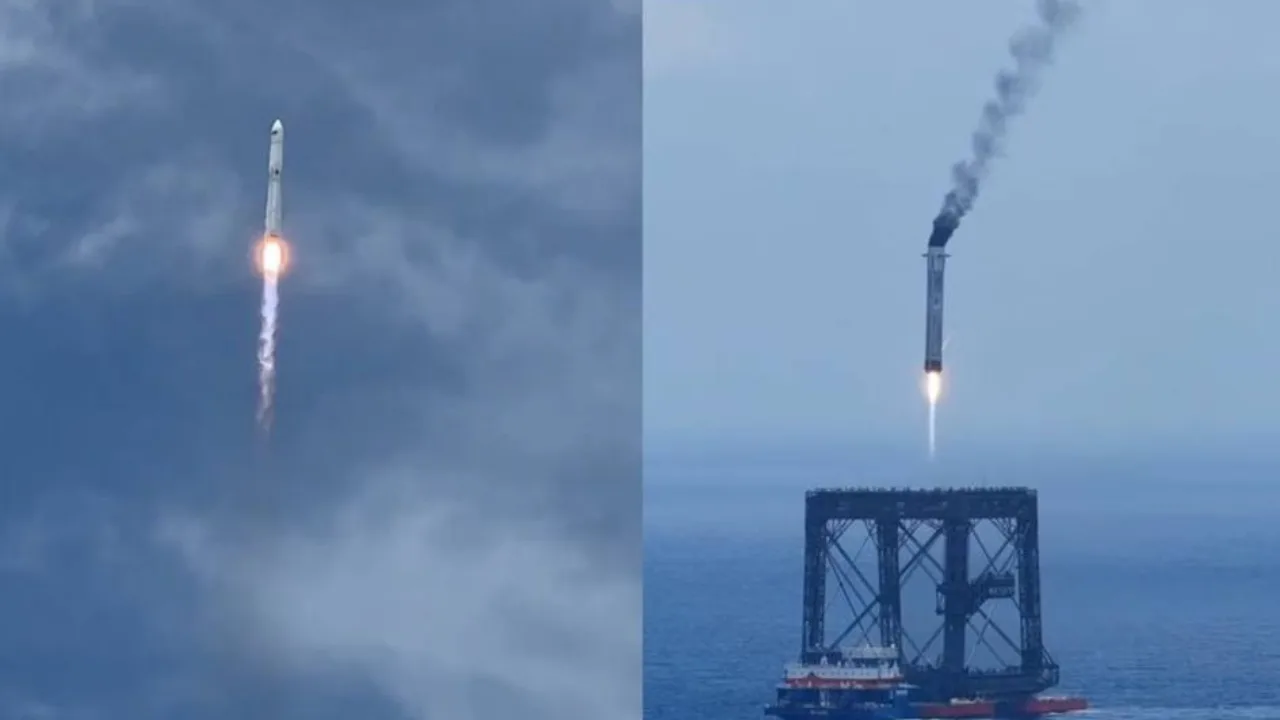
China has achieved another major milestone in space technology, drawing global attention. This was reported by Earth.uz.
For the first time, Chinese specialists successfully returned a multi-use rocket booster to Earth. This accomplishment is recognized as one of the key historical stages in China’s modern space program.
The technology will significantly reduce the cost of launching payloads into orbit in the future. According to official data, the Long March 10B rocket launched from the Wenchang Space Launch Site on Hainan Island.
Following the planned flight sequence, after the upper stage separated, the booster began its vertical descent approximately six minutes later. Thanks to complex engineering calculations, the device landed precisely and intact on a specialized floating platform at sea.
This once again demonstrates China’s high capability in managing space technology. Experts believe this success enables China to compete on equal terms with leading U.S. companies in the field of reusable rockets.
Currently, SpaceX, led by Elon Musk, and Blue Origin, owned by Jeff Bezos, are effectively using such technologies. Conventional rockets are typically used only once, and their expensive components become unusable after flight.
Reusing boosters reduces the cost of each launch by several times. For comparison, SpaceX successfully landed its Falcon 9 rocket for the first time in 2015.
Today, the company conducts hundreds of launches per year and reuses boosters up to ten times. China began its first practical tests of this kind at the start of this year.
The new Long March 10B rocket can compete with Falcon 9 in technical capabilities and payload capacity. It can deliver more than 16 tons of useful payload to low Earth orbit.
It should be emphasized that Chinese engineers chose a unique approach for landing the rocket. While U.S. rockets land independently on ground pads or special vessels, the Chinese rocket is secured to the floating platform using special grips.
This news also had a positive impact on financial markets. After the successful launch, shares of China’s leading aerospace companies rose by several percent.
This reflects growing investor confidence in the country’s space future.