



Capable of regenerating any part of its body
Although the human body has a unique complex structure, it lags behind other representatives of nature in some physical capabilities. This was reported by Zamin.uz.
For example, if a person loses a finger, it does not grow back. However, in nature there are creatures that have the ability to completely regenerate any part of their body.
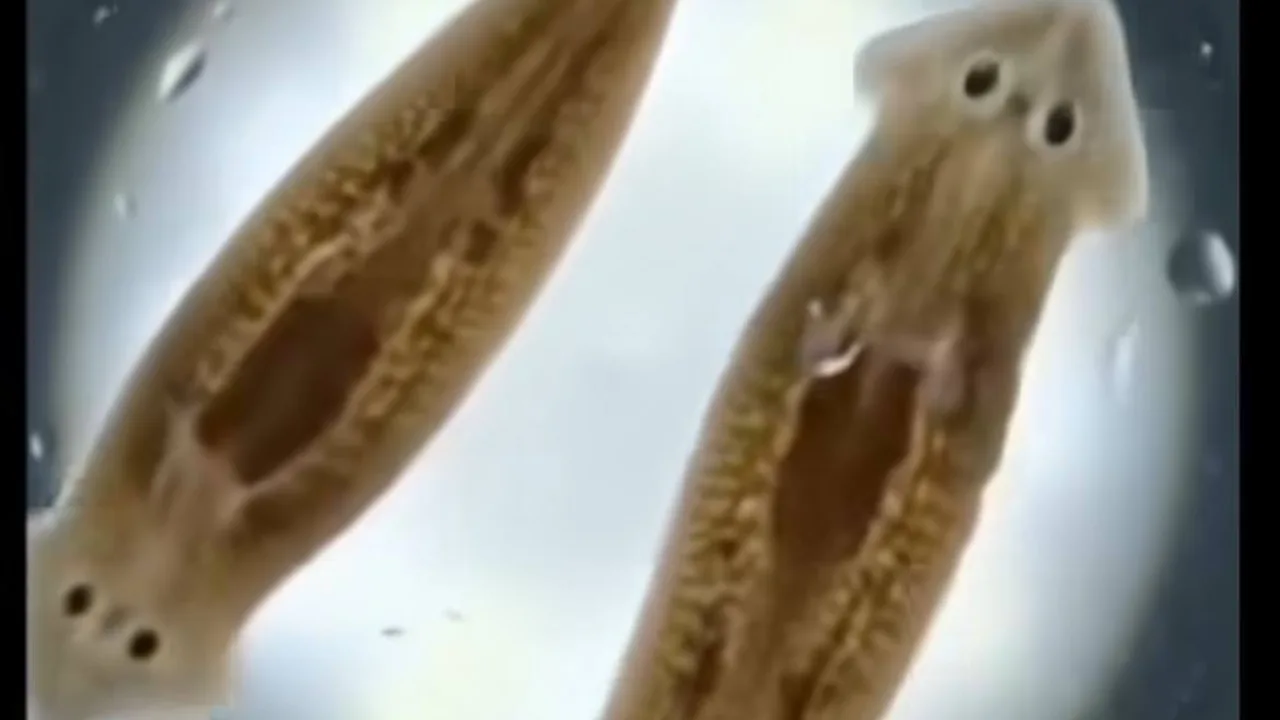
One such creature with this extraordinary ability is the flatworm, known as planaria. Despite its simple appearance and small size, this tiny worm’s regenerative capacity astonishes scientists.
If this worm is cut into two pieces, after some time, each piece develops into a complete and independent organism.
The head section grows a new tail, while the tail section forms a new head. In highly complex laboratory experiments, planaria bodies have been divided into as many as 279 pieces—and astonishingly, each piece developed into a new worm.
The secret behind this remarkable ability lies in special cells called neoblasts found in the planaria’s body. Neoblasts are essentially stem cells that can transform into any type of tissue or organ in the body.
When the body is injured or a part is removed, these cells immediately become active. They begin to multiply rapidly and rebuild the missing parts from scratch.
Thus, planaria can regenerate not only their tails or heads, but also their nervous systems and all internal organs.
Today, scientists around the world are studying this ability in depth.
The main goal of these studies is to achieve revolutionary breakthroughs in human medicine. If we fully understand this regeneration mechanism, in the future it may become possible to restore human tissues, treat damaged vital organs, and cure nervous system disorders.
This process, refined by nature over millions of years, could open new horizons in medicine for humanity—and planaria remains one of the most important living sources on this path.