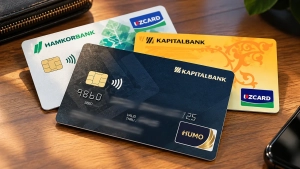



How daily financial habits affect a person's future well-being

Nail Terengulov, a data analyst at AVO Bank and an industry expert, shared his observations on how daily financial habits impact people's lives, as reported by Zamin.uz.
The small economic decisions we make every day directly influence long-term prosperity. Unplanned spending, poor credit choices, or the lack of a savings habit can lead to serious problems over time.
Below, we discuss the most common financial mistakes and how to avoid them. Understanding why financial errors are costly is essential.
While daily purchases may seem insignificant, they accumulate into substantial amounts over months or years. This money could have been saved for buying a home, obtaining quality education, maintaining health, or going on a vacation.
Systematic mistakes trap individuals in a cycle of burdensome debt. Excessive credit accumulates, eventually making it impossible to meet obligations.
This situation not only worsens people's credit history but also places a serious strain on their mental well-being. Today, financial literacy is as vital as water and air for every individual.
Loans, deposits, bank cards, mobile apps, and various payment methods have become an inseparable part of daily life. Financial knowledge helps distribute income correctly, understand loan agreements deeply, protect against fraud traps, and prepare for unexpected economic downturns.
The absence of a personal financial plan often leads to failure. Saving money without clear goals is extremely difficult.
It is essential for individuals to define their short-, medium-, and long-term goals. These may include purchasing new household appliances, children's education, buying or building a home, launching a personal business, or securing retirement.
Without a clear goal, available funds are often spent on impulsive and unnecessary purchases. The lack of a long-term plan forces people to take on loans under harsh conditions when unexpected illness, job loss, or major expenses arise.
Considering inflation levels in Uzbekistan's financial market, keeping money without a plan is also risky, as its purchasing power decreases over time. Although many people have sufficient income, they often run out of funds by the end of the month.
The main reason for this is the lack of personal budget tracking. Without planning income, mandatory payments, and daily expenses in advance, it becomes impossible to determine where money is being spent.
To track income and expenses, one can use modern mobile apps, electronic spreadsheets, or even a simple notebook. It is necessary to regularly record every inflow and outflow.
According to a widely practiced international rule, allocating 50% of income to essential needs, 30% to desires, and 20% to savings is optimal. First, analyzing the category of basic expenses—such as food, transportation, and utility payments—is key to financial stability.