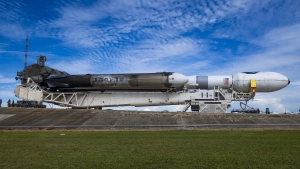
NASA has launched a special mission to save its space observatory
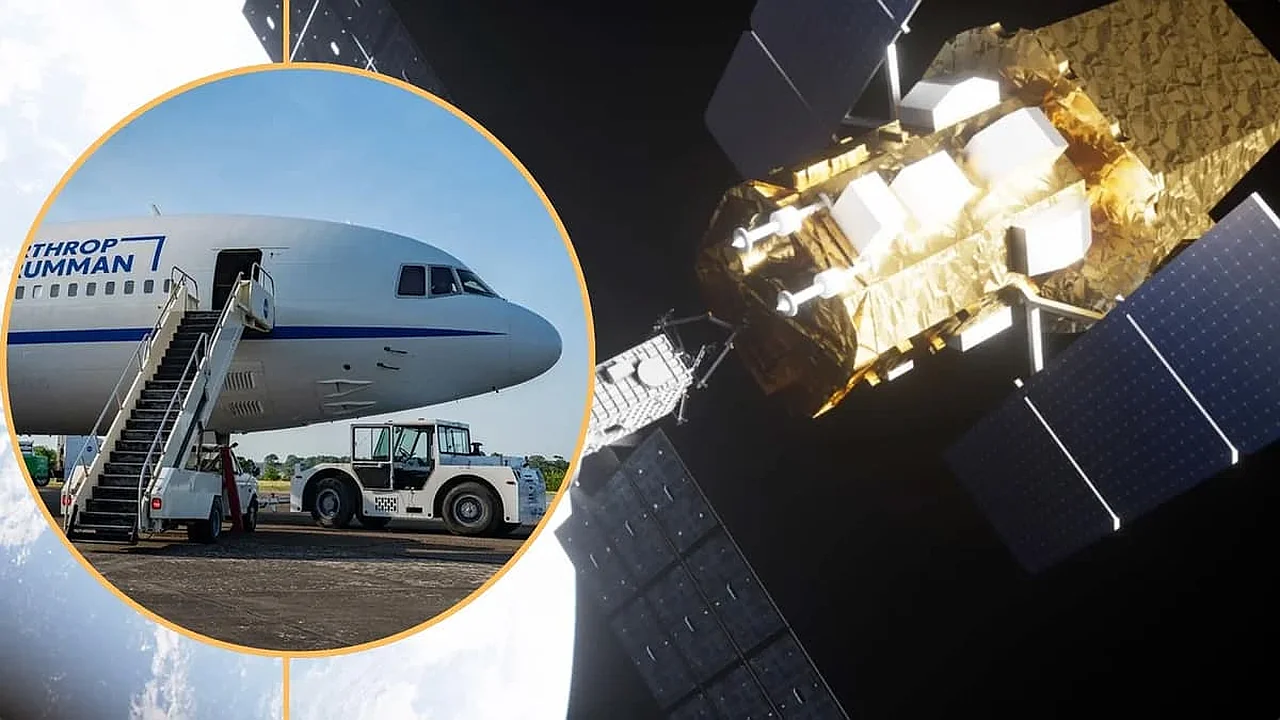
The National Aeronautics and Space Administration (NASA) has launched a unique operation to save the Swift Observatory, named after Neil Gehrels, from burning up in Earth’s atmosphere—a mission critical to ongoing astrophysical research. This was reported by Zamin.uz.
As part of this effort, the Pegas XL launch vehicle completed its final flight, deploying the specialized Link spacecraft into orbit. The mission is notable not only for its scientific importance but also because it marks the first time a private company has been tasked with moving a government-owned satellite to a different orbit—a historic milestone in space operations.
Since 2004, the Swift Observatory has been studying gamma-ray bursts and high-energy cosmic events. However, over two decades of operation, increased solar activity and atmospheric drag have significantly lowered its orbit.
Without onboard propulsion, the observatory cannot raise its altitude on its own, raising concerns that it may soon re-enter the atmosphere and disintegrate.
The task of rescuing the telescope has been assigned to the Link spacecraft, developed by Catalyst Space Technologies. According to plan, in the coming weeks, Link will approach Swift and conduct a detailed inspection.
Following this, three robotic arms will grapple the observatory—a maneuver expected to be one of the most complex technical operations ever performed in orbit.
If the capture is successful, Link’s ion thrusters will activate, gradually raising both spacecraft to a safe altitude of 600 kilometers.
If all proceeds as planned, scientists will be able to continue using Swift to explore the mysteries of the universe for several more years. The mission also stands out for its financial and legal dimensions.
NASA has signed a $30 million contract with a private company for this effort, signaling the growing role of the private sector in maintaining and servicing space infrastructure.
Previously, such complex tasks were carried out only with direct government agency involvement. This mission also marks the historic finale of the Pegas XL rocket.
Over its 36-year career, the Pegas XL completed 45 missions, renowned for its unique air-launch system. The rocket was carried aloft by a modified aircraft over the Marshall Islands, released at a specific altitude, and then ignited its own engines to deliver payloads to orbit.
It was precisely this capability—launching from locations where ground-based launches are impossible—that made Pegas XL the ideal vehicle for this mission.