Time passes faster on Mars compared to Earth
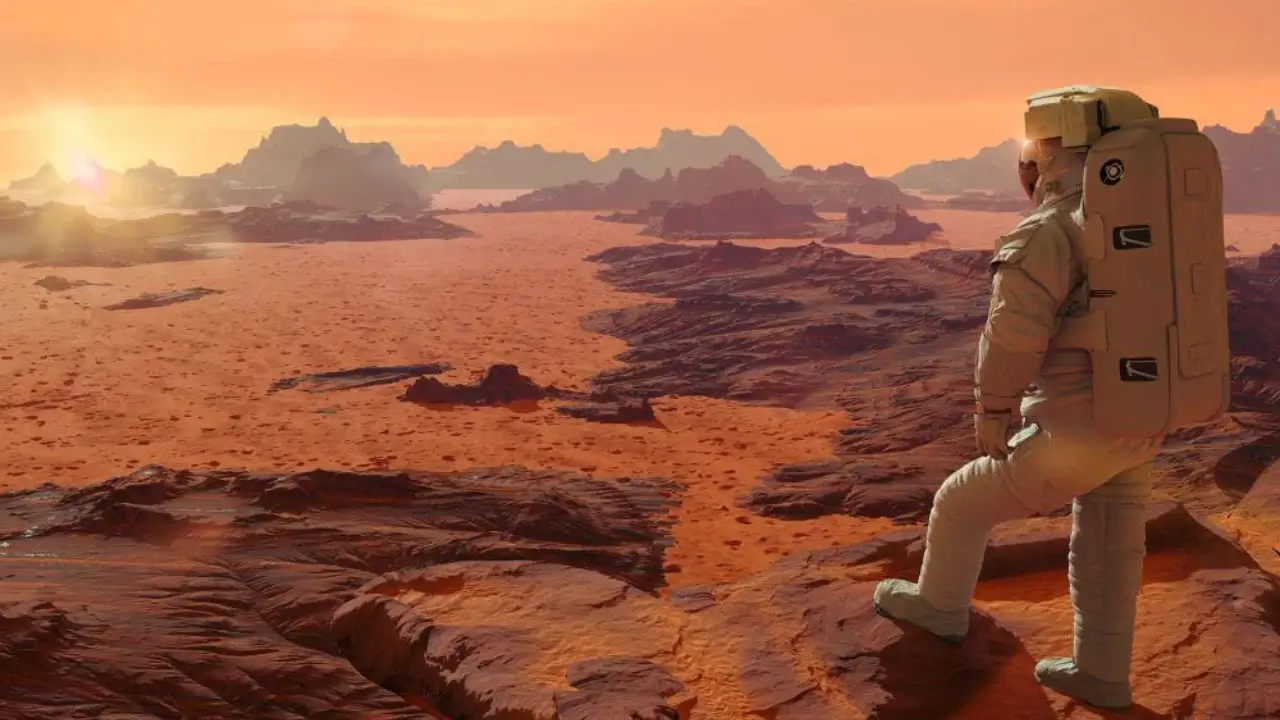
According to research conducted by scientists, time passes slightly faster on Mars compared to Earth. This was reported by Zamin.uz.
This conclusion is scientifically determined based on Einstein's general theory of relativity. The research results were published in "The Astronomical Journal," and the Space publication provided a broader explanation of this information.
It has been found that the difference in time on Mars is due to several factors. Mars has a weaker gravitational force compared to Earth, the shape of its orbit around the Sun, and the gravitational influence of the Sun, Earth, and Moon are among these factors.
According to Einstein's theory, the passage of time depends on the observer's location and the gravitational field. This phenomenon is known in science as "time dilation" and is explained by the twin paradox.
According to the twin paradox, if one of two twins is on a spaceship moving close to the speed of light, that twin will return younger than the twin who stayed on Earth. On Mars, the faster passage of time is caused by its farther distance from the Sun and the unique shape of its orbit.
When Mars approaches the Sun, its movement speeds up, and when it moves away, it slows down. As a result, one day on Mars is 477 microseconds shorter compared to Earth.
This small difference will be important in the future for synchronizing navigation and communication systems between Mars and Earth. Scientists emphasize that accurately calculating such differences is necessary for the effective management of Mars-related technologies.