



It has been confirmed that Earth-like planets are more numerous than expected
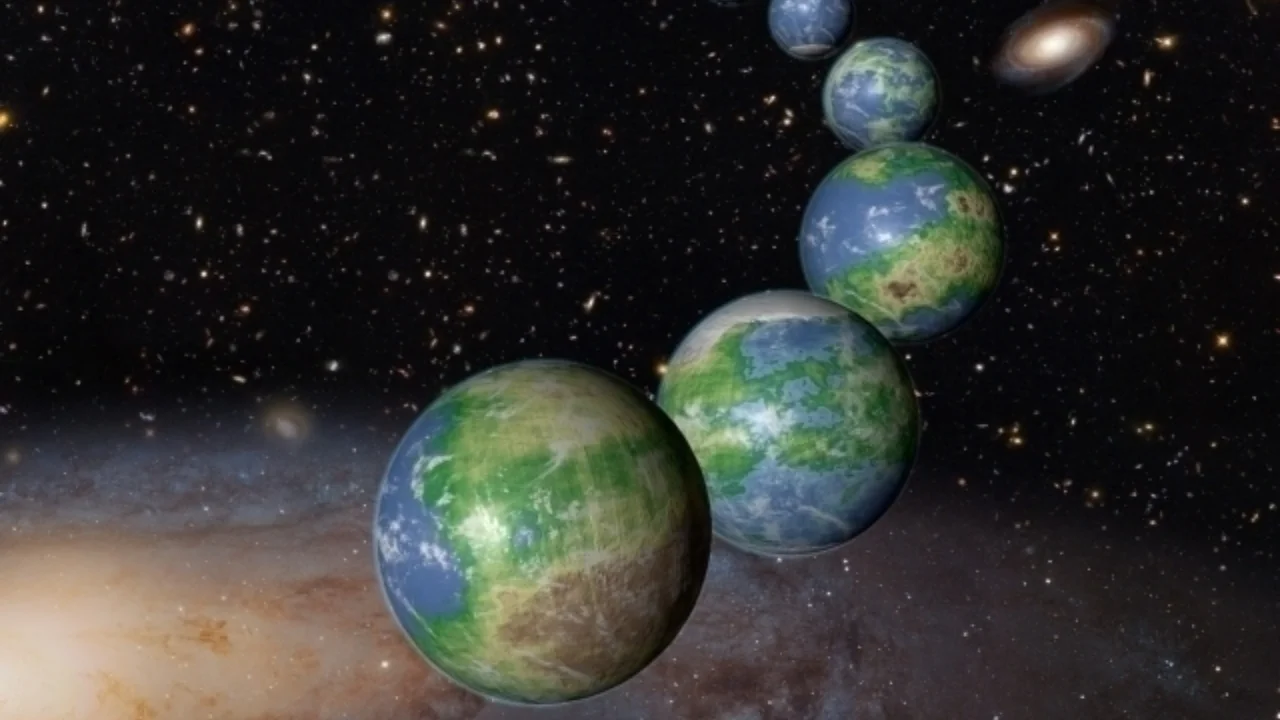
It has been found that Earth-like planets occur more frequently in the universe than usual. This was reported by Zamin.uz.
The results of a new study published in the journal “Science Advances” showed that the number of planets where life could exist in the universe is greater than previously expected. According to the study, such planets may form as a result of powerful supernova explosions occurring around young stars.
Scientists believe that Earth and similar planets formed from planetesimals composed of a mixture of ice and rock. However, before these bodies became planets, they lost a large portion of their internal water and underwent a drying process.
During this drying process, heat generated by the decay of short-lived radioactive isotopes, particularly aluminum-26 isotope, played an important role. The presence of these isotopes in meteorites confirms their utilization in the early stages of the Solar System.
Previously, it was theorized that such radioactive materials could only enter the protoplanetary disk through supernova explosions at close distances. However, since a nearby explosion could destroy the disk, this theory was illogical.
Researcher Re Sawada from the University of Tokyo and his team proposed a new explanation called the “immersion mechanism” for this issue. According to this, the supernova explosion occurred at a safe distance from the Solar System, approximately 3.2 light-years away.
As a result, particles from the explosion became a stream of cosmic rays and entered the protoplanetary disk. Radioactive materials entered the disk in two ways: isotopes like iron-60 through dust particles, and aluminum-26 formed as cosmic rays collided with stable atoms in the disk.
This mechanism corresponds with the elemental composition found in meteorites. Researchers believe that 10–50 percent of stars similar to the Sun form in such radioactive environments.
This indicates a large number of dry and rocky planets in the galaxy that could be suitable for life.