



Archaeologists have found traces of ancient Indian travelers in the Valley of the Kings
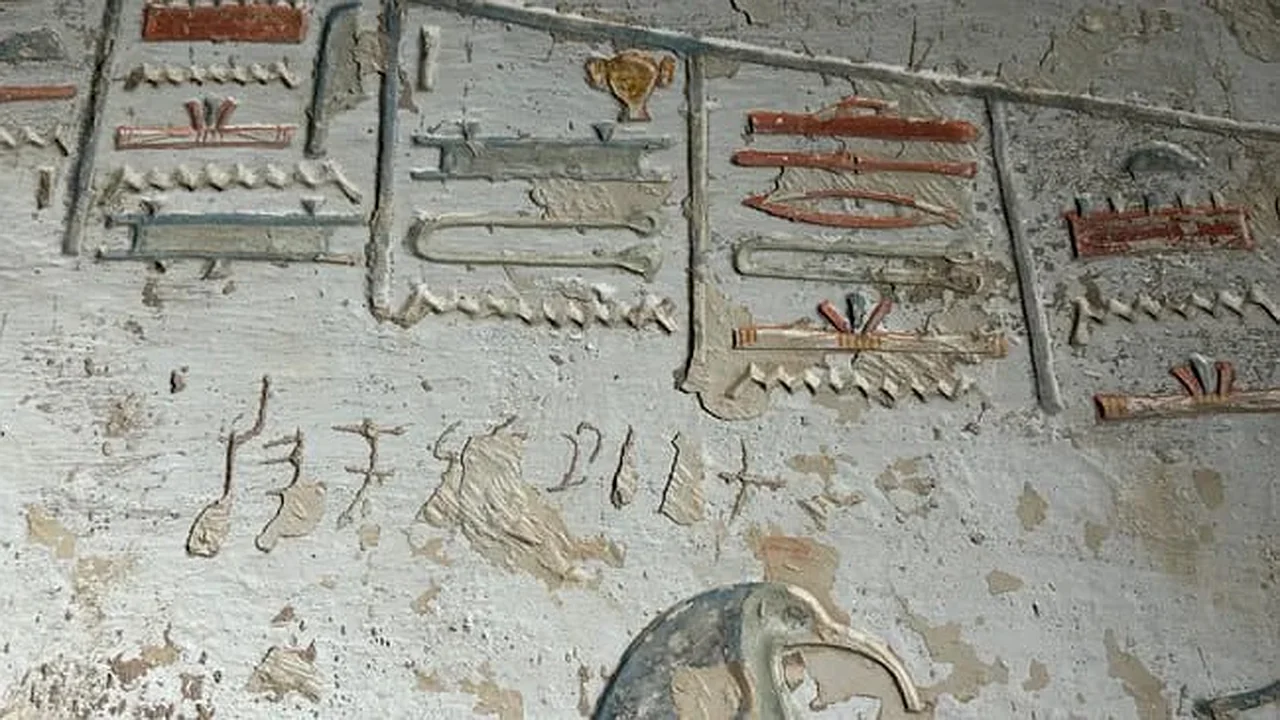
Archaeologists have discovered traces of ancient Indian travelers in Egypt's famous Valley of the Kings. This was reported by Zamin.uz.
This discovery revealed dozens of inscriptions, which were found to be written in three different ancient Indian languages. This news, announced by Live Science magazine, provides new information about the extensive travels of Indian guests during the period when Egypt was part of the Roman Empire.
This era was famous for attracting numerous travelers and explorers from distant lands. The inscriptions were found in six different tomb complexes within the Valley of the Kings.
Ingo Straux, a professor at the University of Lausanne who studied the inscriptions, explained that they date back to the period when Egypt was under Roman control and was a popular destination for international visitors. The findings provide direct evidence of the presence of Indians in one of ancient Egypt's most sacred and mysterious places.
One particularly important inscription is in Sanskrit and was written by a man named Indranandin, who identified himself as an envoy of King Kshaharata. According to Professor Straux's analysis, Indranandin arrived by ship at the port of Berenice along with other Indians and then traveled inland to reach the Valley of the Kings.
This journey demonstrates the advanced maritime and overland travel capabilities of ancient Indians during the Roman period. Approximately half of the discovered inscriptions are written in the ancient Tamil language used in southern India.
The name Chikaikoran appears eight times across five different tombs, making him the most frequently mentioned individual in these ancient writings. French researcher Charlotte Schmid was amazed that this person wrote his name on the tomb walls in very high and hard-to-reach places.
Notably, Chikaikoran's name is located five meters above the entrance to Pharaoh Ramses IX's tomb, requiring great effort and possibly special equipment or assistance to reach such a height. Researchers speculate that Chikaikoran may have been a mercenary or a merchant, but his exact status and the unusual motivation behind his choice of inscription locations remain a mystery that continues to baffle the scientific community.
This discovery adds valuable information to our understanding of ancient international relations between India and Egypt. These inscriptions represent some of the earliest evidence of direct contact between Indians and Egyptian historical sites, showing that travelers from the Indian subcontinent were actively leaving their mark on monuments that were already ancient in their time.
The findings highlight the multicultural nature of travel and tourism within the Roman Empire and open new avenues for research regarding ancient Indian diaspora and exploration patterns. Scientists continue to analyze these remarkable inscriptions, hoping to uncover more information about the lives, professions, and motivations of these ancient Indian visitors who came to Egypt.
The presence of Sanskrit and Tamil inscriptions confirms that the travelers came from various regions of India and sought to write in their own languages. These findings will help deepen our understanding of the interconnectedness of ancient world cultures in the future and serve as a new source for historical scientific research.