



The world's largest iceberg, A23a, has almost completely melted away
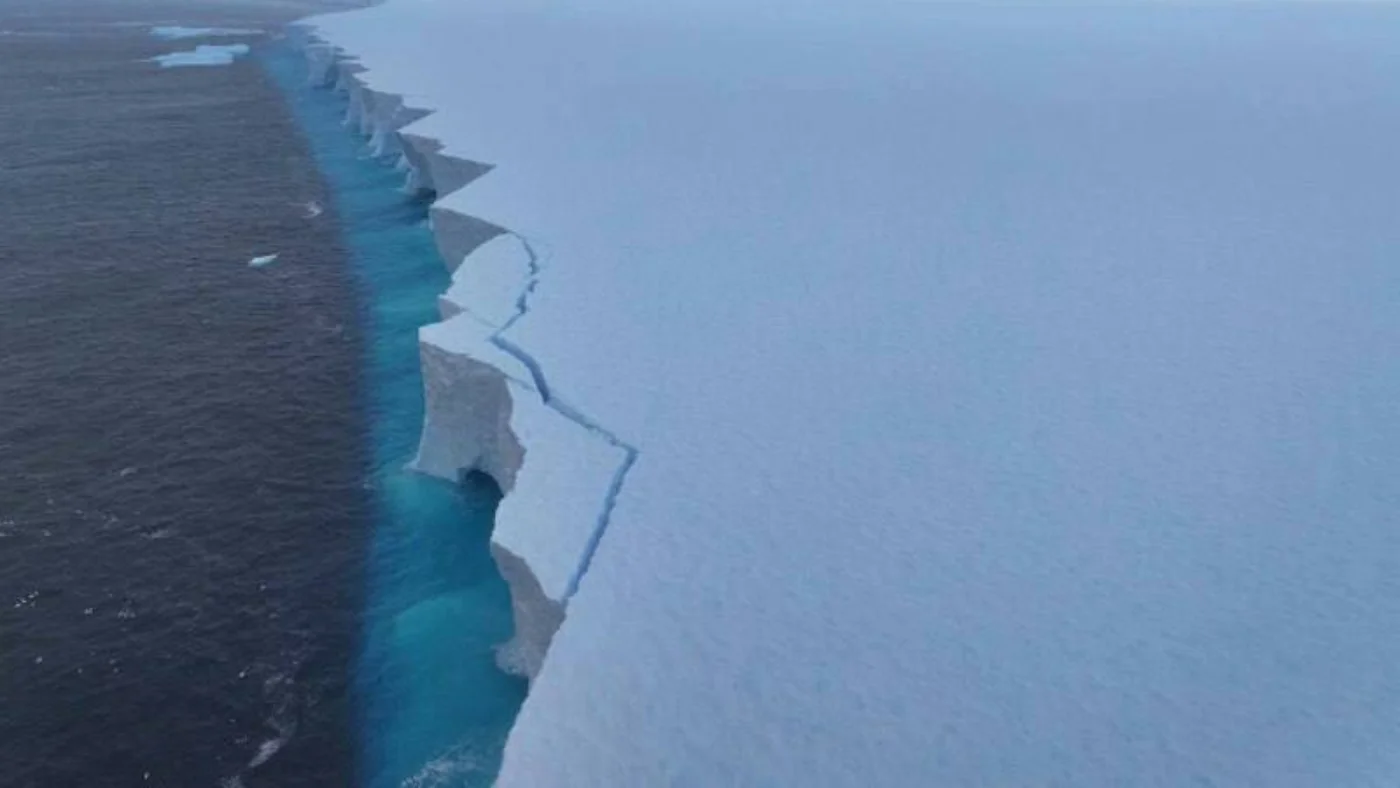
One of nature's most amazing and massive phenomena has come to an end. Zamin.uz reported on this.
By the end of 2025, the A23a iceberg, recognized as the largest piece of ice on our planet, has almost completely eroded and lost 99 percent of its original width. Specialists from the Arctic and Antarctic Research Institute provided official information regarding this.
Speaking about the final state of the ice giant, experts focused specifically on the numbers. In January of this year, the area of this ice mountain was approximately 1,300 square kilometers.
However, as of today, less than 50 square kilometers of it remain. Currently, A23a is floating in the open ocean and is disintegrating before everyone's eyes.
Polina Soloshchuk, a leading expert at the Institute's Center for Ice and Hydrometeorological Information, noted that this process is irreversible. Over the last three months, A23a has covered a distance of nearly a thousand kilometers, reaching the boundary where the Southern and Atlantic Oceans meet.
It is currently moving around the 49th parallel of southern latitude. The experts' conclusion was brief and definitive: the A23a iceberg has completely ended its life.
The disappearance of this massive glacier is a result of climate change and natural environmental processes. For reference, the A23a iceberg broke off from the Filchner Ice Shelf in Antarctica many years ago, in 1986.
At that time, its total area was 4,170 square kilometers, a figure several times larger than the territory of many major cities. This ice giant remained stationary in the shallow part of the Weddell Sea for over 30 years.
Later, it began its journey along the coast of Antarctica. Although it came to a halt once more at the beginning of 2025, it resumed its movement near South Georgia Island by August.
However, as a result of rapid erosion at the end of the year, A23a completely lost its volume and said goodbye to its status as the world's largest iceberg. Now, it is merging into the ocean waters only in the form of small fragments.