



Chinese Scientists Discover New Minerals in Lunar Soil
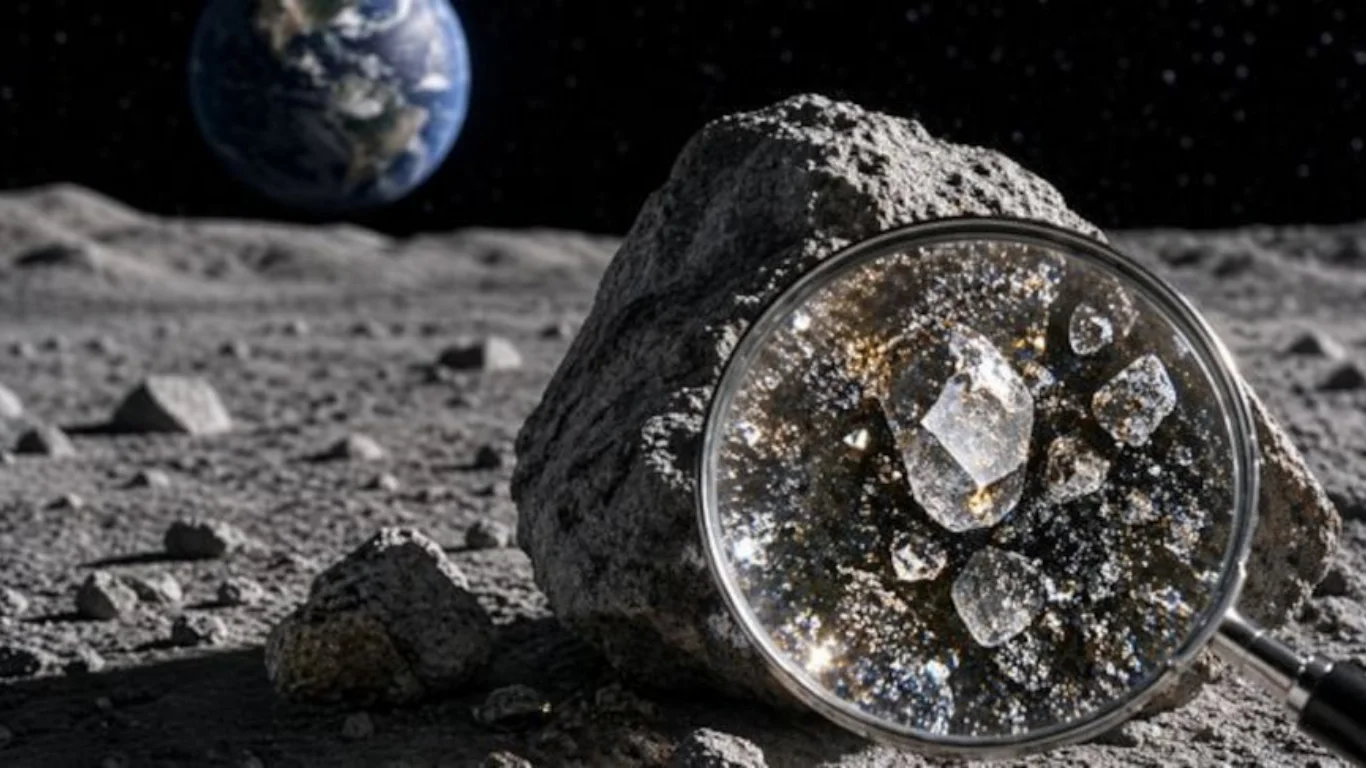
Chinese scientists have discovered two new minerals, previously unknown to science, in soil and rock samples collected from the lunar surface. This was reported by Zamin.uz.
This significant scientific news was officially announced at the opening ceremony of the eleventh China Space Day event held in Chengdu. This finding is generating great interest in the field of space exploration and will serve to enrich our understanding of the Moon's formation history.
It is reported that new minerals belonging to the phosphate group were isolated from the samples brought back to Earth by the Chang'e-5 spacecraft. Researchers named these new substances magnesiochangisite and changisite.
These rare minerals were thoroughly studied by a special commission under the International Mineralogical Association, officially confirmed, and included in the international classification. Experts emphasize that this discovery is of vital importance for a deeper study of lunar geology and its chemical composition.
With these new findings, the total number of minerals identified by humanity on the Moon to date has reached eight. Such research helps not only to understand the structure of our natural satellite but also to evaluate the possibilities of using space resources in the future.
As a reminder, the Chinese government successfully launched the Chang'e-5 spacecraft to the Moon in 2020. As part of this mission, the craft collected nearly two kilograms of soil and rock samples from the lunar surface and brought them back to Earth.
Currently, a series of scientific studies and work on new discoveries are being conducted in the world's leading laboratories based on these samples. It is expected that even more astonishing data will be announced as a result of these investigations in the future.