


Saudi Arabia Raises Oil Prices for Asia to Record Levels
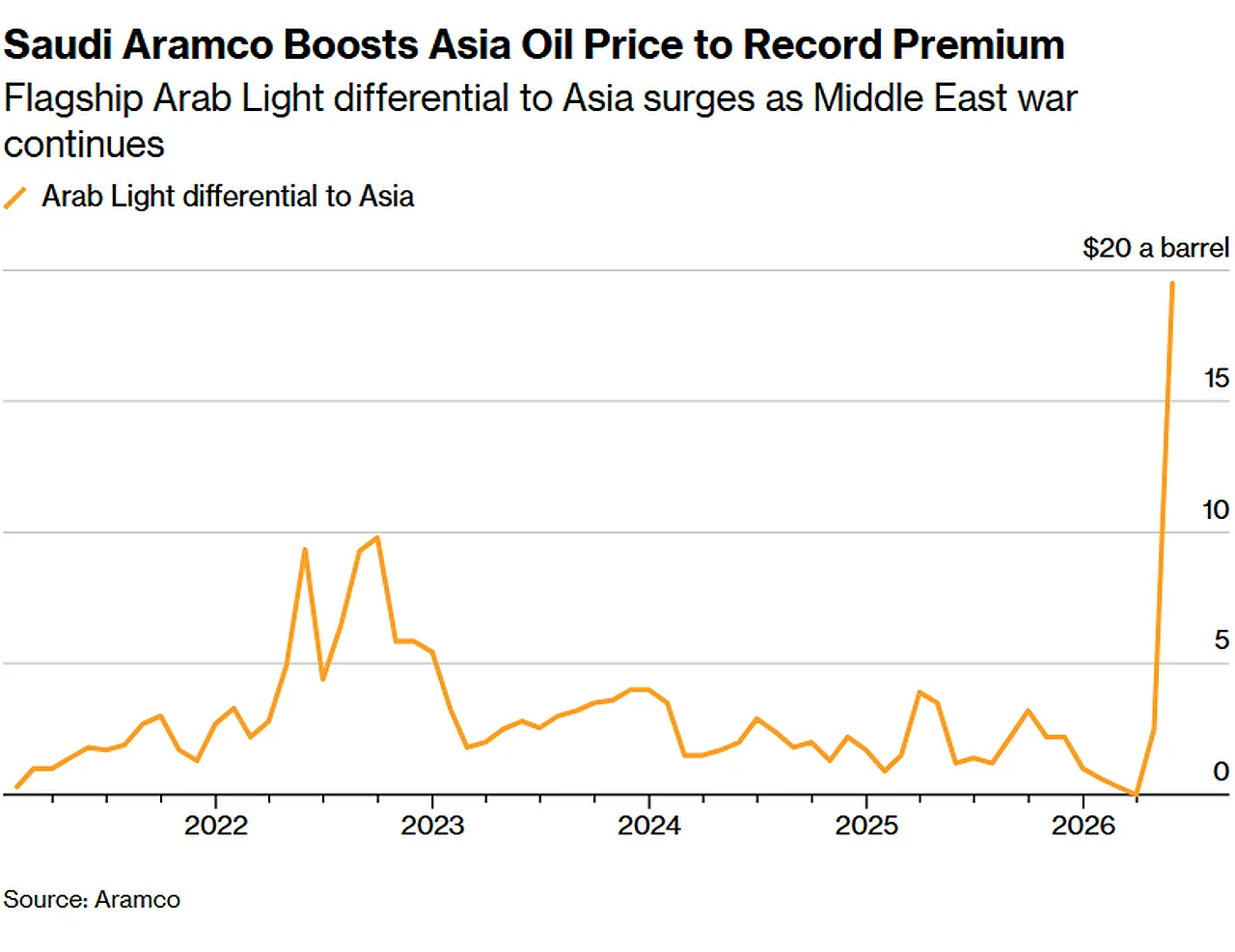
Saudi Arabia has raised the price of its flagship Arab Light crude oil for Asian markets to unprecedented levels. This decision follows the escalation of armed conflicts in the Middle East and the near-total closure of the Strait of Hormuz by Iran.
This situation has severely undermined stability in global energy markets and drawn the attention of international experts. Data from economic publications indicate drastic shifts within the oil industry.
Saudi Aramco, the state-owned oil giant, set the price for Arab Light crude for Asian refineries for the coming month at nearly twenty dollars above regional benchmarks. This represents the highest increase in the industry's history.
Meanwhile, Brent crude prices have also risen by more than fifty percent due to the impact of hostilities. As the regional conflict enters its sixth week, shipping through the strategically vital Strait of Hormuz has virtually ground to a halt.
Consequently, millions of barrels of oil from Saudi Arabia and other major Gulf producers have been cut off from their traditional routes. In response, the Saudi government was forced to reroute oil flows from the port of Ras Tanura to the port of Yanbu on the Red Sea coast.
the distance between these two ports exceeds one thousand two hundred kilometers. Despite logistical challenges, Saudi Aramco's official price list still reflects standard prices at the main loading terminal.
The company has asked customers to submit separate requests for the volumes of crude they wish to receive from both ports. It was also noted that only Arab Light crude would be delivered via the port of Yanbu.
Prices have surged not only for this grade but for all types of oil products destined for the Asian market. Although the closure of the Strait of Hormuz is hindering transportation, price hikes are being observed across all directions.
Specifically, shipments to the United States and Northwest European countries have also faced record price increases. This situation could further exacerbate energy resource shortages and inflation risks in the global economy.