



Ancient city walls found in the cave
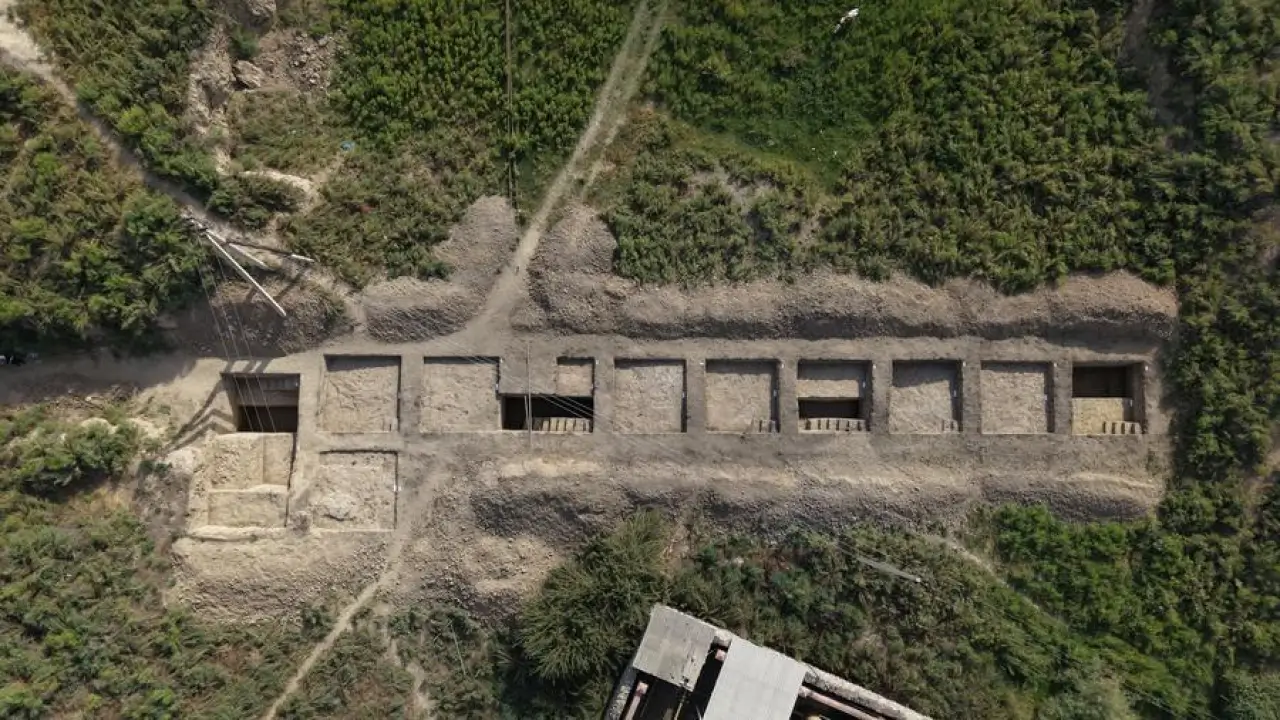
During a joint expedition organized in the Fergana Valley with the participation of Uzbek and Chinese archaeologists, unique finds were discovered among the ancient ruins of the city of Quva. This was reported by Zamin.uz.
Researchers managed to identify some sections of the city walls. It was revealed that these walls date from the 3rd century BC to the 10th century AD.
This was reported by podrobno.uz. According to archaeologists, these defensive structures were used over a long historical period, starting from the times of the Parthian and Davan states up to the era of the Samanid rule.
The finds cover a total area of 110 thousand square meters and confirm the developed cultural connections between the East and West along the Great Silk Road. By studying how the construction technologies of the walls changed over different periods, it is possible to identify historical stages and cultural influences in the city’s architecture.
Currently, traces of city gates, palaces, residential buildings, streets, and craft workshops have been found in the ruins area. According to the head of the expedition, Liu Bing, these discoveries confirm that Quva was one of the major trade and administrative centers in the region in ancient times.
Systematic excavations are planned to begin in 2026 in the palace area of the city. These studies will help to thoroughly investigate Quva’s internal layout and restore its historical appearance.