

Trump established an alternative Peace Council to the UN
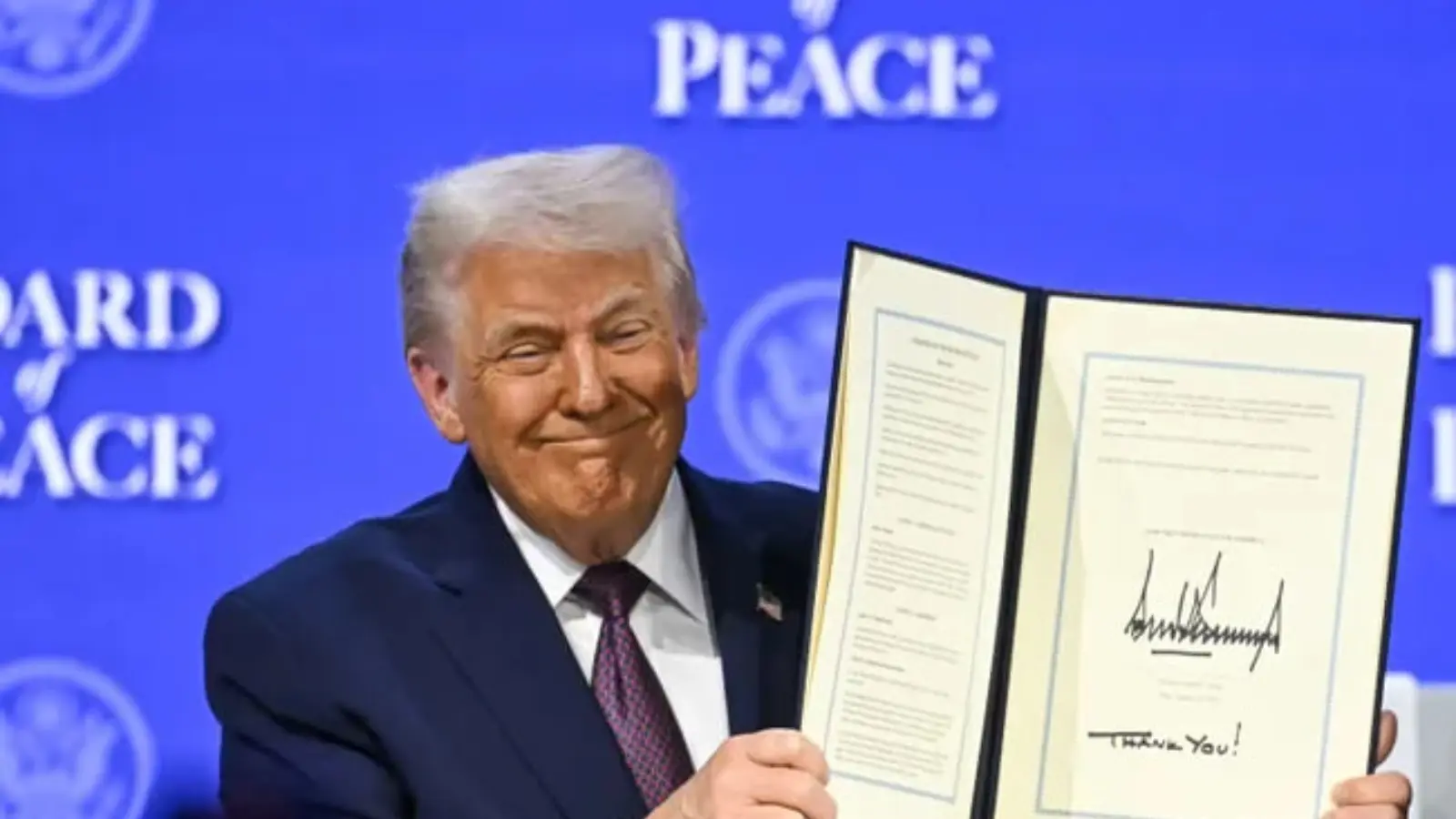
US President Donald Trump signed the charter of the Peace Council. This was reported by Zamin.uz.
This new international organization was established as an alternative to the UN. The signing ceremony took place within the framework of the World Economic Forum in Davos.
It was attended by countries from the Middle East and South America (Saudi Arabia, Qatar, UAE, Argentina, Paraguay), as well as Uzbekistan's President Shavkat Mirziyoyev, Hungarian Prime Minister Viktor Orban, Armenian Prime Minister Nikol Pashinyan, and Azerbaijani President Ilham Aliyev. At the ceremony, about 20 country representatives were on stage alongside Trump.
However, among them, the traditional US allies in Western Europe were not seen. According to Trump, the Peace Council will cooperate with other international organizations, including the UN.
After Trump's speech, White House Press Secretary Caroline Levitt announced that this council will now officially operate as an international organization. During the ceremony, heads of state came up one by one to sign the document next to Trump.
The Peace Council was initially established to manage the Gaza Strip in accordance with Trump's peace plan. However, according to its charter, the council's activities are much broader, effectively functioning as an alternative body to the UN.
Trump himself chairs the council. Member states are proposed to allocate $1 billion to join the council.
This proposal has so far been received by about 60 countries, including Russia, Belarus, and Ukraine. On January 20, Belarusian President Alexander Lukashenko was the first in Europe to sign the document to join the Peace Council.
At the same time, some European countries are refusing to join the council. This is due to Russia being invited.
Russian President Vladimir Putin also confirmed receiving the invitation. He stated that Russia is ready to allocate $1 billion from its US-blocked assets to this council, established as the governing body for Gaza.
The future development of this organization's activities remains a focus of attention for many countries.