The global oil market depends on strategic sea routes
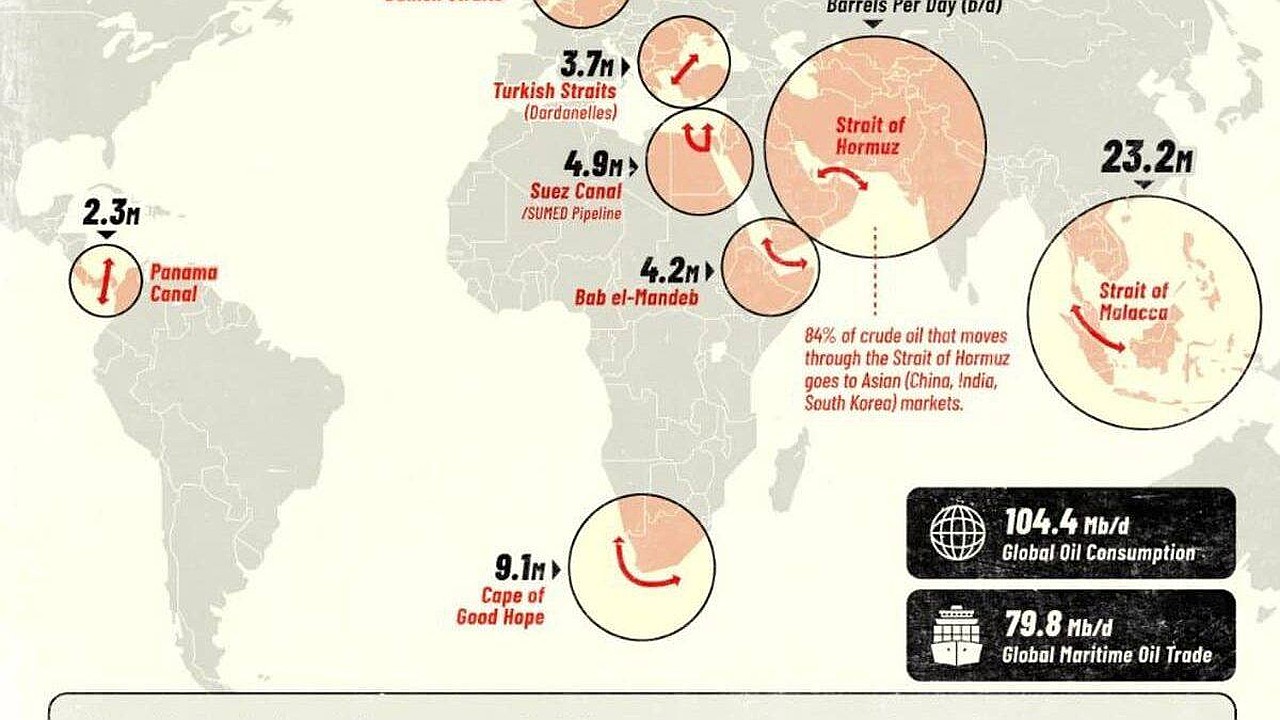
The global oil market remains heavily dependent on several narrow maritime chokepoints. Zamin.uz reports this.
According to data provided by the US Energy Information Administration, in the first half of next year, the majority of oil transported by sea worldwide will pass through these strategic points. Approximately 703 million barrels of crude oil are delivered daily to various countries via these narrow routes.
This process is of critical importance for the stability of the global economy. The Strait of Malacca is highlighted as the most crucial route.
Twenty-three million barrels of oil are transported daily through this region, accounting for nearly 29 percent of all maritime trade conducted worldwide.
This route serves as a lifeline for major economies such as China, Japan, and South Korea. Additionally, the Strait of Hormuz, located between Iran and Oman, is considered extremely important from the perspective of global energy security.
One-fifth of the world's oil consumption passes through this strait, and any geopolitical tension could lead to sharp fluctuations in oil prices. Furthermore, the Suez Canal, the Bab el-Mandeb Strait, and straits in Denmark and Turkey within Europe also play a significant role in oil logistics.
Oil exported from Russia and the Caspian Sea region enters the global market precisely through these routes. Experts believe that any blockade or conflict at these strategic points could disrupt the global energy system and lead to instability in crude oil prices.
Therefore, all countries are paying special attention to ensuring the security of these routes.